

Built for the floor.
Fluent in the front office.
Eight industries where we know the roles, the certifications and the pay rates by heart. Production through engineering, temp through direct placement, in every one of the 50 states.
We staff the floor through the front office.
Most staffing companies pick a lane: light industrial or professional, temp or direct hire. C3 Workforce covers the whole plant. The production associate on second shift, the welder who passed the bend test, the quality inspector sorting a held shipment, the maintenance technician who keeps the line running and the controls engineer who commissioned it. Same recruiters, same screening standard, same accountability, whether the placement is temporary, temp to hire, contract or direct.
Below, each industry gets the same treatment: what we place, why we know it, the roles we fill most, and a short read on what the labor market looks like right now, with every number sourced and dated.
When a customer puts a shipment on hold, a plant needs people who can read a print, use a gauge, follow a sort instruction and document what they found. In numbers, on short notice, for a job that might last three days or three months. It is the hardest kind of staffing to do well and one of the things we are known for. Read about it below.
Every candidate we send, in every industry, is screened to one standard: qualified enough to work in our own office.
01 / Automotive
Tier 1 and Tier 2 suppliers, assembly, stamping, battery.
Michigan is where C3 started, and the supplier base is where we learned the trade. Since 2010 we have staffed Tier 1 and Tier 2 suppliers, stamping plants, machining shops, sequencing centers and assembly operations along the I 96 and I 275 corridor around Livonia. As we followed clients into new markets, starting with the I 85 supplier network that feeds BMW Spartanburg, we brought the same approach with us.
We fill the whole plant, not just the line. Production associates, press operators and material handlers on the floor. Quality inspectors, sorters and containment crews when a shipment is on hold. Tool and die makers, maintenance technicians and controls technicians who keep the equipment running. Quality, manufacturing and controls engineers on contract or direct hire when a launch needs more people than the org chart has.
Knowing the industry means knowing the details. We know what a PPAP is, why a customer specific requirement matters and what it costs when a line goes down for lack of a second shift crew. We know that supplier plants are running record hours and overtime on flat headcount, which is exactly when a screened temp to hire bench pays for itself.
Roles we fill
What the market looks like right now
Data as of September 13, 2026August 2026, preliminary. Down 4,500 from July and essentially flat from a year earlier (down 400). The only major durable goods category to decline in August.
Source: BLS Current Employment Statistics, series CES3133600101, Sept 4, 2026 Employment Situation release. Seasonally adjusted.Production and nonsupervisory employees in motor vehicles and parts worked 45.6 hours a week in August 2026 versus 42.6 in August 2025. Overtime reached 6.5 hours a week in July 2026. Plants are stretching crews rather than adding heads.
Source: BLS CES series CES3133600107 and CES3133600109, August 2026 (preliminary) and July 2026. Seasonally adjusted.Production and nonsupervisory pay in motor vehicles and parts rose $1.63 an hour over the year, from $32.64 in August 2025.
Source: BLS CES series CES3133600108, August 2026 (preliminary) versus August 2025. Seasonally adjusted.The seasonally adjusted annual rate topped 16 million for the sixth straight month. Hybrids took 15.7 percent of August sales while EV share fell to about 6 percent, and new vehicle days supply dropped to 73, the lowest since April 2025. Plants are running lean.
Source: Cox Automotive and NADA Market Beat, Sept 2 and Sept 9, 2026; Cox Automotive inventory report, Sept 10, 2026.Launching, ramping or covering a shift gap? Tell us the plant, the roles and the headcount. Quotes go out within 24 hours.
 02 / Aerospace and defense
Direct placement for a growing industry.
Aerospace is where our direct placement practice has grown fastest. Our recruiters place structures assemblers, A&P mechanics, avionics technicians, NDT inspectors, CNC machinists and quality engineers with airframe, engine and defense programs. We place with airframe, engine, MRO and defense programs in multiple markets across the country, and with the supplier base of machining, castings, tooling and harness shops that feeds them.
This is a credential heavy industry and we treat it that way. We know the difference between an NDT Level II in ultrasonic and one in penetrant, what AS9100 and first article inspection mean for a quality hire, and why documenting US person status for export controlled work has to be done carefully and without over screening. We know that an A&P certificate takes years to earn, and that a mechanic supplied to a repair station has to sit inside an FAA compliant drug and alcohol testing program.
Aerospace hiring is a rate story. Airframers are raising production rates, engine makers are buying up casting capacity, and defense primes are staffing multiyear munitions and shipbuilding programs at the same time. The people who can do this work are scarce and the search takes time most HR teams do not have. That is why clients hand it to us.
Roles we fill
What the market looks like right now
Data as of September 13, 2026July 2026, preliminary. Up 26,000 from 568,500 in July 2025 and up 16,900 since December 2025. One of the fastest growing manufacturing sectors in the country.
Source: BLS Current Employment Statistics, series CES3133640001 (aerospace product and parts manufacturing), fetched Sept 13, 2026. Seasonally adjusted.Second quarter 2026, including more than 6,200 commercial airplanes. The 737 program began moving to a 47 per month rate during the quarter.
Source: Boeing second quarter 2026 results, investor release, July 28, 2026.Aerospace and defense attrition was nearly 15 percent in 2024, more than double the average across other US industries. Engineering and skilled trades are the hardest roles to fill.
Source: AIA and McKinsey study on tackling talent gaps in aerospace and defense, released June 16, 2025, sample of more than 30 A&D organizations.Announced June 17, 2026 at the site's 75th anniversary. The plant employs 5,600, does final assembly of the Super Hercules airlifter and builds Lightning II fighter center wings. A direct placement market for C3.
Source: Lockheed Martin news release, June 17, 2026.Need an inspector, a machinist or an engineer with the right stamps? Send us the requisition. We recruit aerospace roles nationwide.
 03 / AI and technology
Direct placement for the people building AI, and the people keeping it running.
Artificial intelligence is the fastest growing hiring category in the country. AI now appears in more than six percent of all US job postings, and employers report AI and machine learning roles are as hard to fill as cybersecurity. It needs two kinds of people. The engineers who build and deploy the models: machine learning engineers, AI engineers, data engineers, data scientists, MLOps and AI infrastructure engineers, computer vision and robotics engineers. And the people who build and run the physical side: data center technicians, critical facilities technicians, electricians, HVAC and controls technicians, and the automation and robotics technicians who keep AI driven equipment on a plant floor working.
We recruit both. Direct placement for the engineering and data roles, where a search takes specialist sourcing and time most HR teams do not have. Direct placement, contract and temporary staffing for the technical and trades roles that every data center campus and automated plant needs by the hundreds. The same standard applies: we know the person, not just the resume, and we check references from people who worked beside them.
This is where our research practice matters most. We track AI job postings, pay, shortages and data center construction every month, and we publish what we find. When you ask us what a machine learning engineer costs in your market, or how many electricians a 1 gigawatt campus will pull from your labor pool, we answer with sourced numbers, not guesses.
Roles we fill
What the market looks like right now
Data as of September 13, 2026A record, nearly double the prior peak of 3.3 percent in 2022. Postings requiring AI skills are up 165 percent over the year, and AI and machine learning tech postings are up 101 percent, five times the growth of tech postings overall.
Source: Indeed Hiring Lab, US Labor Market Snapshot, August 24, 2026; Bipartisan Policy Center analysis of Lightcast data, September 8, 2026; Dice August 2026 Tech Jobs Report.The third fastest growing occupation in the United States, with about 24,800 openings a year. Computer and information research scientists are projected to grow 22 percent. Industrial machinery mechanics, the technicians who keep automation running, grow 14 percent with 51,900 openings a year.
Source: BLS Employment Projections 2025 to 2035, released August 27, 2026; BLS Occupational Outlook Handbook.A record for the primary US markets, up 24.8 percent, with vacancy at an all time low of 1.4 percent and more than 80 percent of new capacity already leased. Atlanta, at about 2,900 megawatts, passed Northern Virginia as the largest construction market in the country.
Source: CBRE, North America Data Center Trends, H1 2026, released August 27, 2026.Installation and maintenance workers in data centers earn about $10 an hour more than the same occupation elsewhere. Data center construction ran above a $75 billion annual pace in July and supplied all of the growth in nonresidential building. Electricians and HVAC technicians now take longer to hire than software developers.
Source: Indeed Hiring Lab, July 14, 2026; US Census Bureau construction spending, July 2026, released September 1, 2026; BLS Employment Projections, electricians, August 27, 2026.Hiring for an AI team, a data center or an automated line? Tell us the roles and the market. We will come back with candidates and the numbers behind the search.
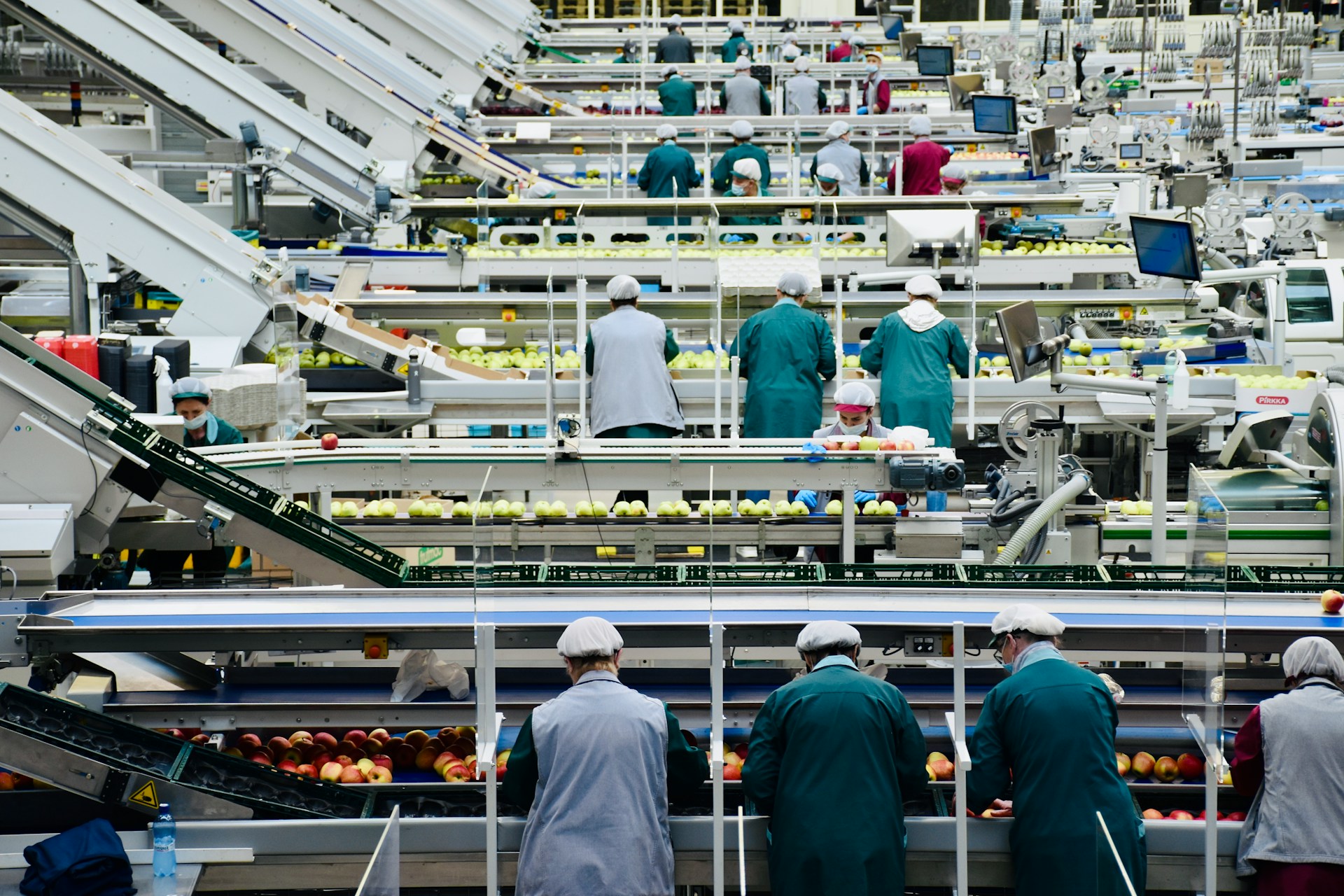 04 / Food manufacturing
Production, sanitation, QA and maintenance for plants that never stop.
Food plants run around the clock, and the people who work in them need to understand things a general labor pool does not: GMP, HACCP, allergen changeovers, lockout procedures on a packaging line and why sanitation shift is the shift that keeps the plant licensed. We staff production, sanitation, packaging, quality assurance, maintenance and warehouse roles for food and beverage manufacturers across the country.
We know the pace. A line that runs 40 hours plus overtime every week, in a cold room, in a hairnet, with a 4 a.m. start is not a fit for everyone. Our recruiters ask about cold, about standing, about early starts and about repetitive work before they place anyone, because a person who quits on day three costs the plant more than an open seat. That is why we screen to one standard and why our associates tend to stay.
The market is moving in two directions at once. Legacy snack, cereal and beef plants are consolidating while dairy, protein beverage, confectionery and poultry operations across the country are building large new plants that will hire through 2029. Both sides need flexible labor: one to wind down cleanly, the other to ramp up without overhiring.
Roles we fill
What the market looks like right now
Data as of September 13, 2026August 2026, preliminary. Down 20,400 from 1,785,000 in August 2025 and down every month since April 2026. The decline is concentrated in beef packing, snacks and cereal.
Source: BLS Current Employment Statistics, series CES3231100001, Sept 4, 2026 Employment Situation release. Seasonally adjusted.Production and nonsupervisory employees in food manufacturing, August 2026, up from $24.00 a year earlier. Plants are still paying up to hold labor even as headcount shrinks.
Source: BLS CES series CES3231100008, August 2026 (preliminary) versus August 2025. Seasonally adjusted.Food production employees averaged 4.2 hours of overtime a week in July 2026, more than a full hour above the manufacturing average. The signature of thin staffing on production and sanitation shifts.
Source: BLS CES series CES3231100009, July 2026 (preliminary); all manufacturing from BLS Employment Situation Table B 2, August 2026. Seasonally adjusted.A 6.2 percent gain, the most of any manufacturing sector, from 2.1 million to 2.23 million jobs while output rises 22 percent. Growth is concentrated in dairy, protein beverages, confectionery and poultry even as legacy beef, snack and cereal plants consolidate.
Source: BLS Monthly Labor Review, industry employment projections 2024 to 2034, June 2026.Ramping a new line or covering sanitation shift? We know GMP from a training video and GMP from experience. Tell us which you need.
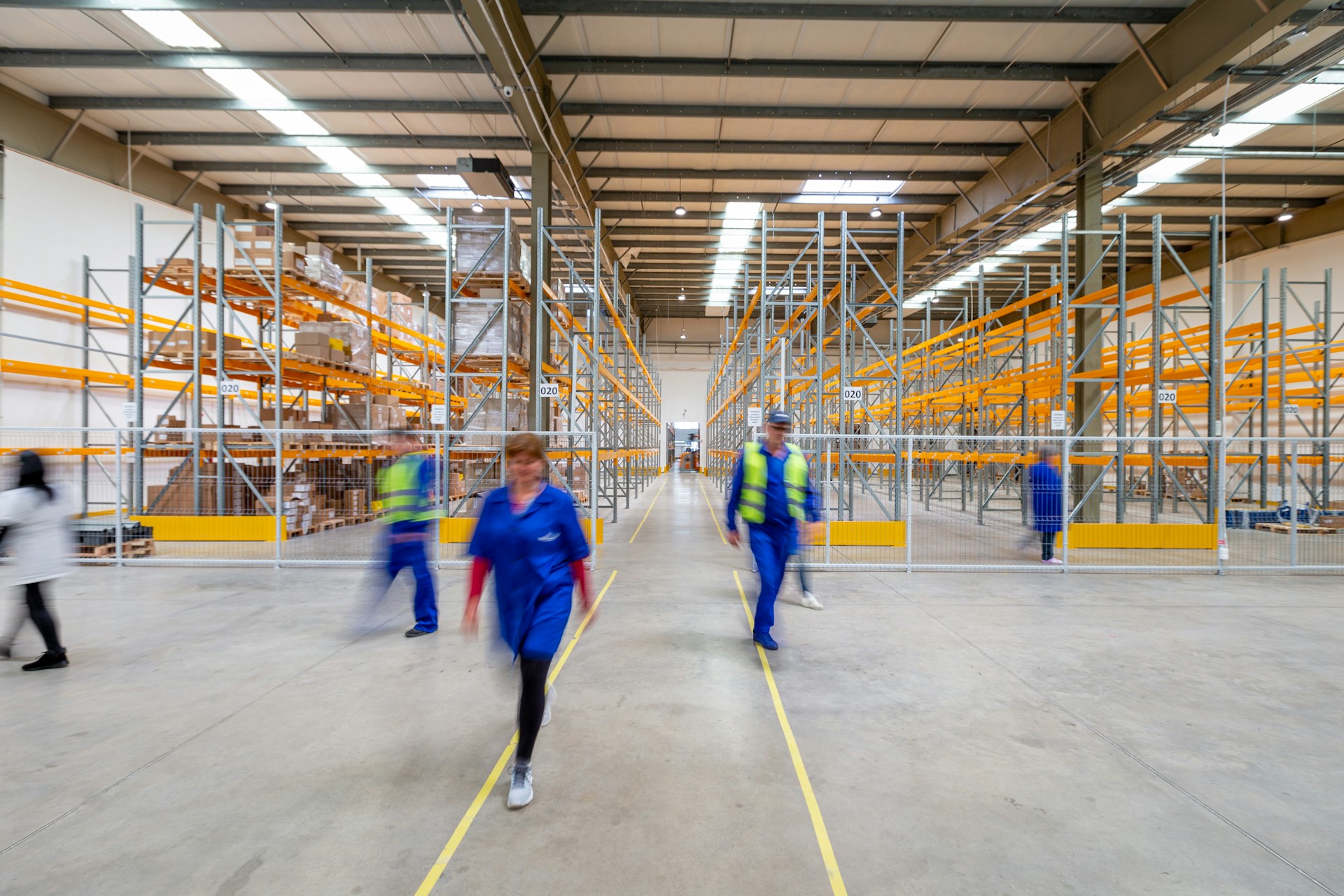 05 / Warehouse and logistics
Distribution, fulfillment and 3PL, at peak and year round.
Distribution centers, fulfillment operations and third party logistics providers are where staffing volume runs highest, and forklift operators, material handlers and order fillers are the three roles we fill most. We staff them year round and we staff them at peak, for distribution centers, fulfillment operations and 3PLs in markets across the country.
The full list is longer: hi lo and reach truck operators, pickers and packers, shipping and receiving, inventory control, cycle counters, sort and rework crews, returns processing and shift leads. We check forklift certifications, ask about lift heights and RF scanner experience, and find out whether a candidate can actually do a ten hour shift on concrete before we send them. The people who cannot are better served by a different job, and the client is better served by not meeting them.
The 2026 warehouse market is not the 2021 market. National warehousing employment is down over the year, automation is spreading through the largest networks, and imports front loaded ahead of tariff changes, so peak season is arriving earlier and running leaner. That favors clients who can add certified operators and inventory people quickly without carrying them all year, which is exactly what a temp and temp to hire bench is for.
Roles we fill
What the market looks like right now
Data as of September 13, 2026August 2026. Down 2,600 from July and down 32,000 from 1,869,400 in August 2025. Transportation and warehousing is the one blue collar sector shrinking over the year.
Source: BLS Employment Situation Table B 1, series CES4349300001, Sept 4, 2026 release. Seasonally adjusted.Industrial truck and tractor operators earned a median $46,420 a year in May 2025, with about 70,700 openings a year projected through 2035.
Source: BLS Occupational Outlook Handbook, material moving machine operators, May 2025 OEWS medians and 2025 to 2035 projections.Second quarter 2026, down 20 basis points quarter over quarter on 85.1 million square feet of net absorption. Big box demand drove the decline.
Source: CBRE, Q2 2026 US Industrial and Logistics Market Report.Truckload rates averaged $2.21 a mile on September 8, 2026 as capacity tightened. Truck transportation added jobs for a third straight month in August, and 214,500 heavy truck driver openings a year are projected through 2035.
Source: DAT dry van report, Sept 8, 2026; BLS Employment Situation, Sept 4, 2026; BLS Occupational Outlook Handbook, heavy and tractor trailer truck drivers.Peak is early this year. Tell us the building, the shifts and the certified operators you need, and we will build the plan.
 06 / Skilled trades
Welders, machinists, maintenance techs.
Welders, machinists, maintenance technicians, industrial electricians, tool and die makers, CNC programmers and millwrights. These are the hardest seats in any plant to fill and the ones where a bad hire costs the most. We recruit them for temp to hire, contract and direct placement across manufacturing, automotive, aerospace and food, and for the data center and energy projects now pulling tradespeople out of every other sector.
Our recruiters know the difference between MIG and TIG, between a machinist who can read a print and hold a tolerance and one who can only load a program, and between a maintenance tech who can troubleshoot a PLC fault and one who can only swap parts. We ask about certifications, weld tests, machines run and tolerances held, and we verify. When a client wants a weld test or a practical before start, we arrange it.
The market for trades is tight. Manufacturing job openings are up more than a third over the year, production pay in durable goods is rising faster than pay for all private workers, and Federal Reserve contacts report skilled trades and technical workers difficult to find. That is why we keep a bench of screened tradespeople ahead of demand instead of starting the search when the order arrives.
Roles we fill
What the market looks like right now
Data as of September 13, 2026July 2026 versus 428,000 in July 2025. Durable goods openings alone rose 76,000 in July, to 429,000 from 255,000 a year earlier.
Source: BLS Job Openings and Labor Turnover Survey, Table 1, July 2026, released Sept 1, 2026. Seasonally adjusted.Production and nonsupervisory hourly earnings rose 4.7 percent in durable goods manufacturing and 5.0 percent in construction from August 2025 to August 2026, versus 3.3 percent for all private production workers.
Source: BLS Employment Situation Table B 8, August 2026, seasonally adjusted; percent changes computed from published dollar values.Of small business owners hiring or trying to hire in August 2026, 47 percent reported few or no qualified applicants. 31 percent had openings for skilled workers versus 13 percent for unskilled.
Source: NFIB Jobs Report, August 2026.May 2025 national medians: electricians $63,190 with 72,700 openings a year; industrial machinery mechanics $64,520; machinists $58,750; welders, cutters, solderers and brazers $53,750.
Source: BLS Occupational Outlook Handbook, May 2025 OEWS medians, 2025 to 2035 projections.Need a welder who passes the test on the first try? Tell us the process, the position and the material. We will tell you who we have.
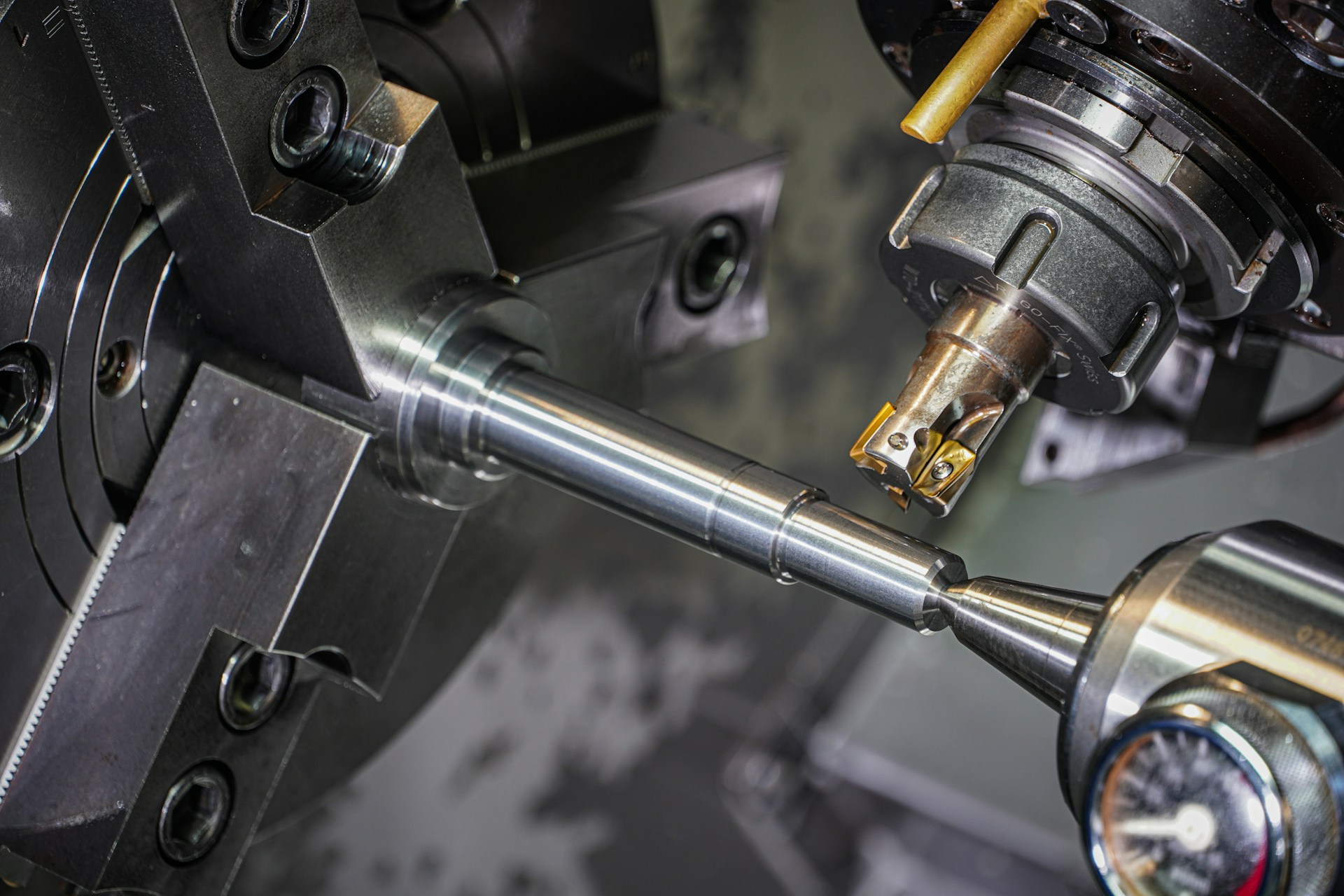 07 / Quality and rework
Inspectors, sorters and containment crews. A C3 specialty.
Quality inspection and rework is a specialty for us, not a side line. When a customer puts a shipment on hold, a plant needs people who can read a print, use a caliper or a gauge, follow a sort instruction exactly and document what they found. It needs them in numbers, on short notice, for a job that may last three days or three months. That is a staffing problem most agencies are not built for. We are.
We place quality inspectors, testers and sorters, containment and rework crews, receiving inspectors, CMM operators, quality technicians and quality engineers with automotive suppliers, aerospace shops, food plants and distribution centers. For containment work we staff crews with a working lead when the client wants one, so the quality manager is not supervising twenty new faces. For ongoing inspection we look for the detail oriented people who stay.
Screening for this work is specific. We ask candidates to read a print, identify a feature, use a measuring tool and explain a defect back to us. We ask about attention span, because sorting parts for eight hours is a skill. And we know the standards our clients live under: PPAP and customer specific requirements in automotive, AS9100 and first article inspection in aerospace, HACCP and hold procedures in food.
Roles we fill
What the market looks like right now
Data as of September 13, 2026Inspectors, testers, sorters, samplers and weighers held 602,000 jobs in 2025 at a median $48,570 a year ($23.35 an hour), with about 66,700 openings a year projected through 2035, mostly replacement.
Source: BLS Occupational Outlook Handbook, quality control inspectors, May 2025 OEWS medians and 2025 to 2035 projections.Production occupations are expected to generate nearly one million openings a year from 2024 to 2034, mostly to replace workers who leave. Inspectors, testers and sorters account for about 69,900 of them.
Source: BLS Career Outlook, "Producing the goods of the future," May 2026.Boeing passed the FAA capstone review for a 737 rate of 47 a month in May 2026 and returned the 787 to 8 a month with a target of 10. Every rate increase scales source inspection and first article work down the supply chain.
Source: Air Data News, May 27, 2026, reporting Boeing CEO Kelly Ortberg's statement.Shipment on hold? Tell us the part, the defect, the location and the count. We will tell you what a containment crew looks like.
 08 / Engineering and technical
Contract and direct hire engineering.
Contract and direct hire engineering completes the floor to front office range. We place manufacturing, quality, controls, automation, robotics and industrial engineers, plus the technicians who keep the automation running: controls technicians, robotics technicians, automation maintenance and PLC troubleshooters.
Most of this work is direct placement or contract for a defined program: a line launch, a new cell, a plant move, a quality system upgrade. Clients use us because an engineering search takes recruiting time they do not have, and because a contract engineer with full benefits at a fixed rate is easier to budget during a launch than a permanent hire. Contract placements convert to direct hire any time.
We recruit engineers the way we recruit everyone else: by knowing the person. We ask what systems they have programmed, which OEM or supplier environments they have worked in, whether they want plant floor work or office work, and whether they will travel for a launch. We check references from people who actually worked beside them. The result is a short list worth your interview time instead of a stack of resumes you have to screen yourself.
Roles we fill
What the market looks like right now
Data as of September 13, 2026365,100 jobs in 2025, projected to grow 12 percent from 2025 to 2035 with about 23,100 openings a year.
Source: BLS Occupational Outlook Handbook, industrial engineers, May 2025 OEWS median and 2025 to 2035 projections.199,700 jobs in 2025, projected to grow 10 percent from 2025 to 2035, with about 16,300 openings a year for electrical and electronics engineers combined.
Source: BLS Occupational Outlook Handbook, electrical and electronics engineers, May 2025 OEWS median and 2025 to 2035 projections.The technicians who keep automation running are projected to grow 18 percent from 2025 to 2035 (14 percent for the group with maintenance workers and millwrights), at a median $64,520 a year.
Source: BLS Occupational Outlook Handbook, industrial machinery mechanics, machinery maintenance workers and millwrights, May 2025 medians and 2025 to 2035 projections.More than a third of 600 manufacturing executives cite equipping workers with needed skills as the top concern for smart manufacturing. More than 81 percent of task hours are expected to remain human driven.
Source: Deloitte 2026 Manufacturing Industry Outlook, Nov 13, 2025.Launch coming and the org chart is short an engineer? Tell us the program, the systems and the timeline. Contract or direct, your call.
Tell us the role. We’ll send the plan.
Most quotes go out within one business day. No pitch, no pressure. Just a number and a start date.