Warehouse staffing for peak and for every other week.
Distribution centers, fulfillment operations and 3PLs. Forklift and reach truck operators, pickers and packers, shipping and receiving, inventory and shift leads, screened by a recruiter who checked the certification and asked about the ten hour shift on concrete. Written quote within 24 hours.
Sources: US Bureau of Labor Statistics, Employment Situation, Table B1, warehousing and storage, series CES4349300001, 1,837,400 in August 2026 versus 1,869,400 in August 2025, seasonally adjusted, released September 4, 2026. BLS Employment Situation, temporary help services, series CES6056132001, 2,519,500, August 2026 preliminary, seasonally adjusted. BLS Occupational Outlook Handbook, material moving machine operators (industrial truck and tractor operators), 2025 to 2035 projections. Quote turnaround is C3 Workforce policy.
Three situations we staff in distribution centers.
The 2026 warehouse market is not the 2021 market. National warehousing employment is down over the year, automation is spreading through the largest networks, and imports front loaded ahead of tariff changes, so peak is arriving earlier and running leaner. That favors operators who can add certified people quickly without carrying them all year.
Peak season, arriving early
Holiday volume, a new customer onboarding or a promotion that doubles order lines for six weeks. Staff up for the peak with pickers, packers and operators who have been screened before the wave hits, then step back down without layoffs.
Certified operators, not just bodies
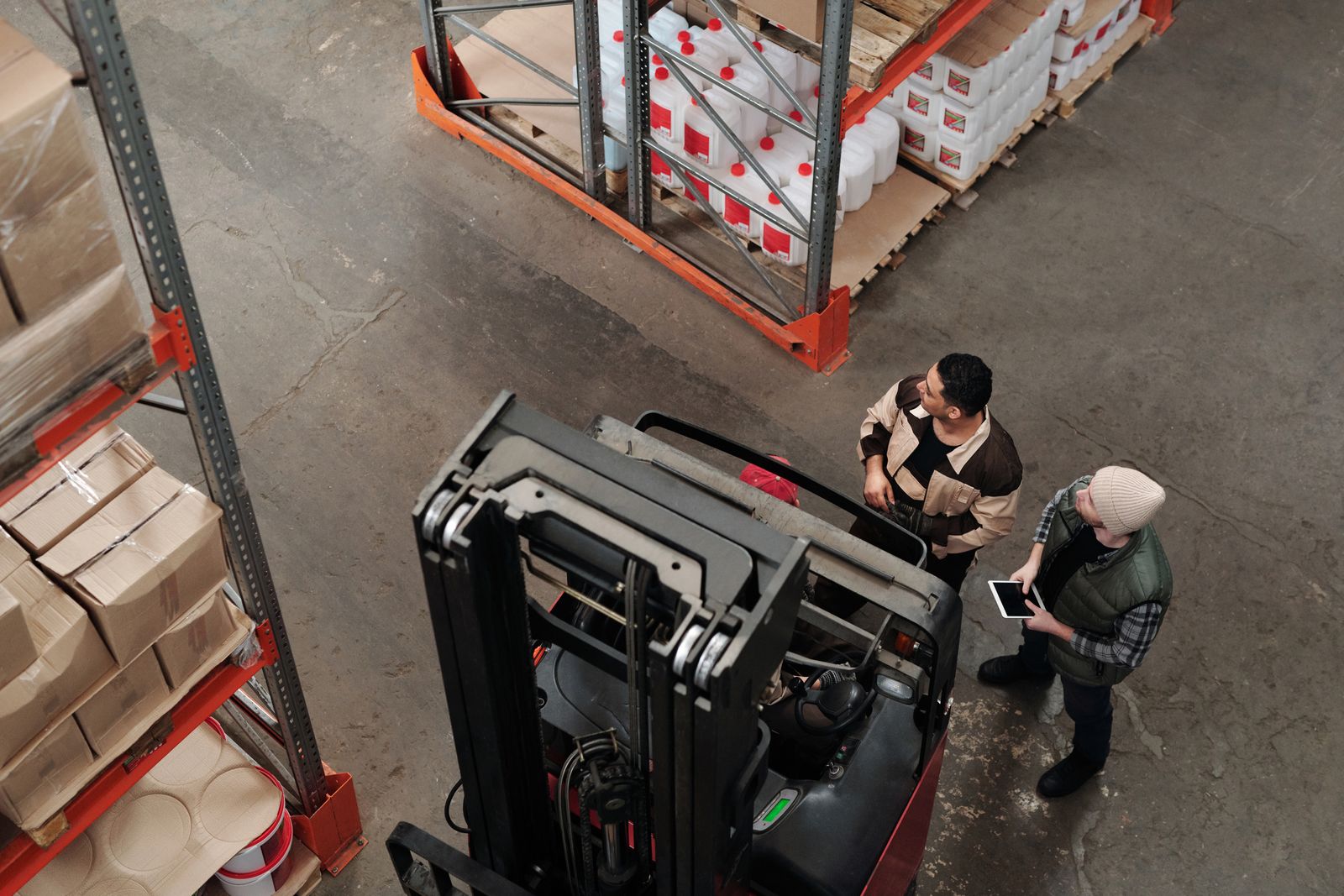
You need reach truck operators who have actually worked at height and hi lo drivers who can load a trailer without damaging the product. We check forklift certifications, ask about lift heights and RF scanner experience, and find out whether a candidate can do a ten hour shift on concrete before we send them.
A core crew that stays
Turnover on the second shift eats your supervisors' time. Temp to hire lets you build a permanent crew from people who have already proven they show up, scan accurately and get along with the lead, and convert them to your payroll when you are sure.
Fewer people, more automation, and a peak that already started.
What the national numbers say about warehousing and logistics in September 2026, and what they mean for the operations manager staffing a building this fall.
US warehousing and storage employment was 1,837,400 in August 2026, down 2,600 on the month and down 32,000, or 1.7 percent, from a year earlier. Transportation and warehousing as a whole shed 51,500 jobs over the same year, the only blue collar sector shrinking while construction and manufacturing added. Output did not shrink with it. The largest online retailer reported second quarter sales up 20 percent and more than 40 percent more items delivered same day or overnight, and it now operates more than one million robots across more than 300 facilities. The Bureau of Labor Statistics expects automation to limit labor demand and slow employment growth in warehousing through 2034. The building is getting busier and the headcount is not following.
What is left is better paid and turns over faster. Average hourly earnings for all transportation and warehousing employees reached $32.73 in August 2026, up 3.4 percent over the year, and production and nonsupervisory pay in the sector rose 4.4 percent against 3.3 percent for all private workers. Transportation, warehousing and utilities carried 392,000 job openings in June 2026, a 5.2 percent openings rate, the highest of any goods handling sector. The same sector turned over 48.0 percent of its workforce in 2025, the sum of twelve monthly BLS separation rates. Half the building, every year.
Peak 2026 arrived early. Retailers pulled imports forward ahead of the Section 301 tariffs that took effect July 24: the Global Port Tracker shows June imports up 13.2 percent from a year earlier, then July down 7.6 percent and August down 4.2 percent. The National Retail Federation said plainly that the industry had an early peak season and will be well stocked for the holidays. Demand on the outbound side is still coming. Bain forecasts holiday sales above $1 trillion for the first time, up 4.5 percent, with online sales up 9 percent, and UPS expects its US volume to jump about 24 percent from the third quarter to the fourth, with peak surcharges beginning September 27. Receiving labor peaked in the summer. Picking, packing and shipping labor peaks in October and November, shorter and sharper than in 2023 or 2024.
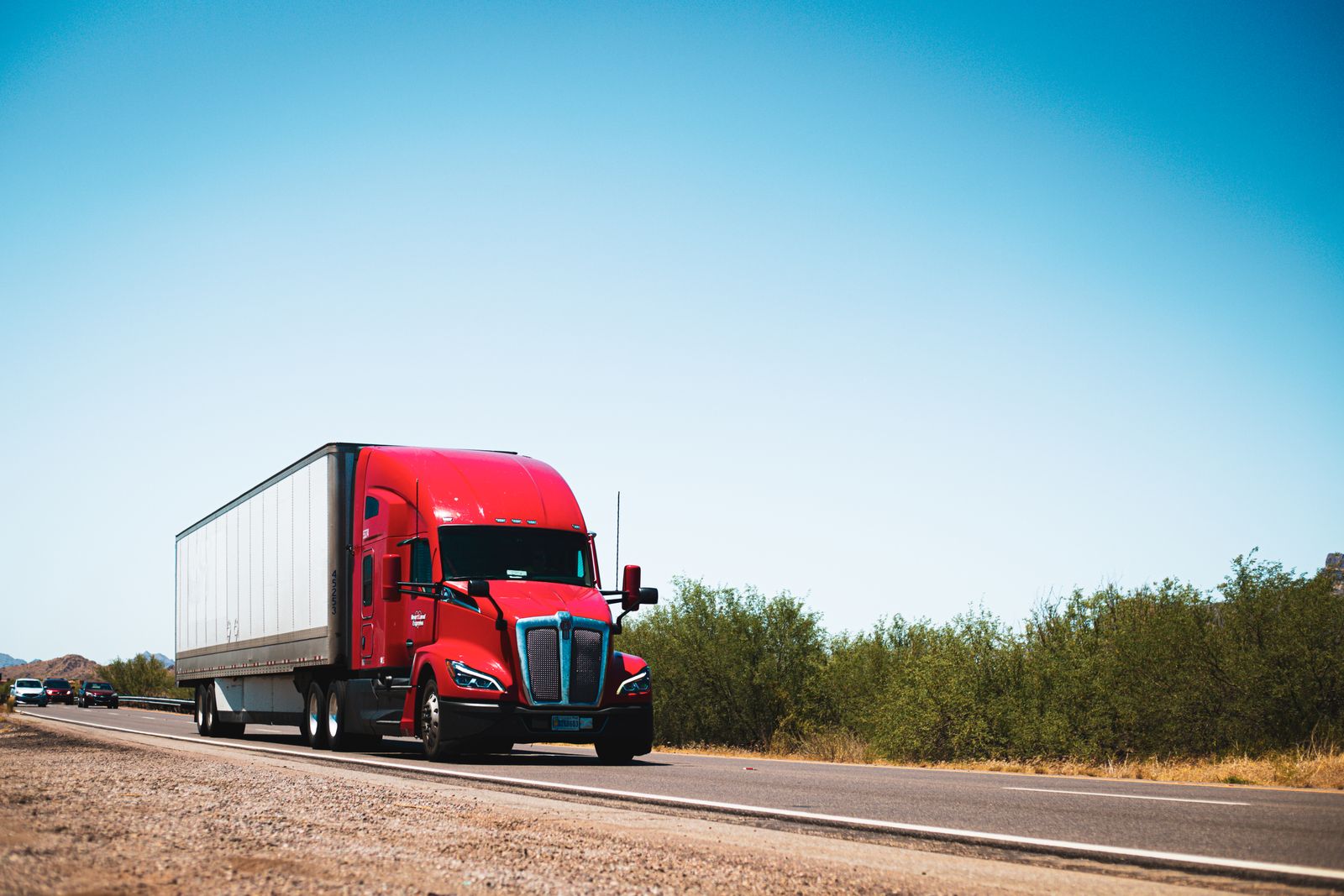
The real estate market turned at the same time. National industrial vacancy fell to 6.5 percent in the second quarter of 2026, the first decline since 2022, on 85.1 million square feet of net absorption, and third party logistics providers and manufacturers signed more than 55 percent of new leases. Occupiers are choosing taller buildings with more power to support automation. On the trucking side, on highway diesel hit $5.967 a gallon on September 7, up $2.20 in a year, dry van spot rates were up 33.6 percent, and federal rule changes are removing an estimated 30,000 to 40,000 licensed drivers a year while about 26,000 have been placed out of service for English proficiency since April 2025. Every mile in and out of your building costs more, which puts dock and yard productivity at a premium.
Regulation is tightening on the floor too. OSHA renewed its heat National Emphasis Program through 2031, with inspections triggered at a heat index of 80 degrees and warehousing named a high risk industry, and five states now require written disclosure of productivity quotas. Transportation and warehousing recorded 4.4 injuries per 100 full time workers in 2024, nearly double the 2.3 rate for all private industry. For the person staffing a distribution center this means the 2026 hire is a certified operator, an inventory control clerk or a conveyor technician more often than another picker, the seasonal window is shorter, and the cost of an untrained body on a reach truck has never been higher.
Sources: US Bureau of Labor Statistics, Employment Situation, Table B 1 (warehousing and storage, series CES4349300001; transportation and warehousing), Table B 3 and Table B 8 (average hourly earnings), August 2026, released September 4, 2026, seasonally adjusted, percent changes computed from published dollar values; BLS Job Openings and Labor Turnover Survey, June 2026 (released August 4, 2026) and total separations rates for transportation, warehousing and utilities, twelve months of 2025 summed; BLS Monthly Labor Review, industry and occupational employment projections overview, 2026; BLS Survey of Occupational Injuries and Illnesses, 2024 data. Amazon second quarter 2026 results, July 30, 2026, and robot fleet announcement, July 2025. National Retail Federation and Hackett Associates, Global Port Tracker, as reported August 10 to 12, 2026. Bain and Company, 2026 holiday forecast, September 8, 2026. UPS second quarter 2026 results and 2026 peak surcharge schedule, as reported August 27, 2026. CBRE, Q2 2026 US Industrial and Logistics Market Report; Cushman and Wakefield, Q2 2026 US Industrial MarketBeat. US Energy Information Administration, weekly on highway diesel price, September 7, 2026. DAT, dry van report, September 8, 2026. FMCSA non domiciled CDL final rule (effective March 16, 2026) as analyzed by FreightWaves, February 12, 2026; Land Line, August 5, 2026 (English proficiency out of service orders). OSHA heat National Emphasis Program renewal, April 2026, as reported by Construction Dive. State warehouse quota laws: California Labor Code 2100, New York Warehouse Worker Protection Act, Minnesota Statutes 182.6526, Washington HB 1762, Oregon HB 4127.The sector replaced nearly half its workforce in 2025. Every open seat is really two: the one you have and the one you will have.
Source: BLS Job Openings and Labor Turnover Survey, total separations rate, twelve months of 2025 summed (FRED series JTU480099TSR).Transportation and warehousing, 2024, versus 2.3 for all private industry. An untrained operator is the most expensive hire in the building.
Source: BLS Survey of Occupational Injuries and Illnesses, 2024 data.Parcel peak is still coming even though imports arrived in June and July. Outbound labor peaks in October and November.
Source: UPS, as reported by Supply Chain Dive, August 27, 2026.Eight roles in a distribution center, and what we check before we send anyone.
A forklift certification card tells you almost nothing about whether someone can work a reach truck at 30 feet. Here is what each role does, the skills and certifications that matter, what C3 screens for, and the shifts you should expect to staff.
Forklift, reach truck and order picker operators
On the floor. Puts away and pulls pallets from racking, replenishes pick faces, loads and unloads trailers, stages outbound freight, and does it without damaging product, racking or people.
What matters. Equipment specific experience: sit down counterbalance, stand up reach, order picker at height with harness, turret trucks. OSHA 29 CFR 1910.178 requires the employer to train and evaluate each operator on the specific truck at the site and re evaluate at least every three years, so the card is a starting point, not a clearance.
C3 screens for. Certification verified, equipment types and lift heights actually run, load types handled and RF scanner fluency, then coordination with you on the site evaluation before anyone drives your trucks.
Shifts. All shifts, with second and third shift hardest to fill. BLS projects about 70,700 openings a year for material moving machine operators nationally.
Pickers, packers and order fillers
On the floor. Picks to an RF or voice directed list, verifies SKU and quantity, packs to the carton and dunnage standard, applies labels, and meets a productivity rate while keeping accuracy above the customer's threshold.
What matters. RF scanner and WMS familiarity (Manhattan, Blue Yonder, SAP EWM and the like), attention to detail, the stamina for a 10 hour shift on concrete, and the ability to keep pace in a metered environment.
C3 screens for. Prior metered work, accuracy history where a previous employer can confirm it, and an honest conversation about the physical demands and the building's temperature before the person accepts.
Shifts. Peak heavy. Two shift and weekend patterns during October and November, then a step down. BLS projects about 904,200 openings a year for hand laborers and material movers.
Shipping and receiving associates
On the floor. Checks inbound freight against the ASN or bill of lading, counts and inspects, flags damage and overages, builds and wraps outbound pallets, prints and applies labels, closes trailers and keeps the dock schedule honest.
What matters. Reading a bill of lading and a packing list, pallet building and load quality, stretch wrap and banding, scanner and printer use, and basic hazmat awareness where the product requires it.
C3 screens for. Dock experience with paperwork responsibility, not just unloading, and comfort working with drivers and carriers under a schedule.
Shifts. Staggered around carrier windows; inbound heavy in the morning, outbound heavy in the afternoon and evening.
Loaders and unloaders
On the floor. Fluid loads and unloads floor stacked trailers and containers, sorts to pallets or conveyor, builds walls that will not shift in transit, and moves the trailer through the door on time.
What matters. Physical capability to lift and repeat for a full shift, safe lifting technique, understanding of load balance, and heat tolerance in summer trailers. This is the role where the OSHA heat emphasis program bites first.
C3 screens for. Prior trailer work, a candid discussion of the pace and the heat, and reliable transportation for early and late starts.
Shifts. Early morning inbound and late evening outbound; peak adds a midday wave. This is the highest turnover seat in most buildings and the one where honest recruiting pays off most.
Inventory control and cycle counters
On the floor. Cycle counts locations, researches and resolves variances, adjusts the WMS with an audit trail, manages slotting and location integrity, and investigates why the system said 40 and the bin held 36.
What matters. WMS transaction depth beyond scanning, spreadsheet competence, root cause thinking, forklift or order picker certification to reach high locations, and the discipline to document every adjustment.
C3 screens for. Variance investigation experience, systems used, and references from an inventory or operations manager who can confirm accuracy.
Shifts. Often off shift so counts happen while the building is quiet. This is the seat automation creates rather than removes, and it is the natural step up for a strong material handler.
Returns, rework and value added services
On the floor. Receives and inspects returns, grades and dispositions product, repackages, relabels, kits and bundles for promotions, and handles the light assembly and ticketing that 3PL contracts increasingly include.
What matters. Attention to detail, grading against a written standard, comfort with repetitive fine motor work, and basic quality documentation.
C3 screens for. Detail oriented work history, a short practical on sorting to a standard when you want one, and the temperament for a quieter, more exacting job than the dock.
Shifts. Days, with a post holiday surge in January when returns arrive. A good place to keep strong peak associates on assignment after the shipping wave ends.
Shift leads and working supervisors
On the floor. Assigns work at the start of shift, tracks throughput and accuracy against the plan, coaches associates, escalates safety and equipment issues, and handles the paperwork when the supervisor is not in the building.
What matters. Prior lead experience in a metered environment, WMS reporting, OSHA 10 or equivalent safety training, powered industrial truck trainer certification where you want leads to run evaluations, and the ability to hold people to a standard without losing them.
C3 screens for. Crew sizes led, metrics owned, how the candidate handled a no show morning, and references from the operations manager above them.
Shifts. Every shift needs one. Leads and supervisors are frequently direct placement or temp to hire with a defined conversion plan.
Conveyor and facilities maintenance technicians
On the floor. Keeps sorters, conveyors, scanners, print and apply units, dock doors, chargers and HVAC running; clears jams to root cause; replaces belts, bearings, photo eyes and motors; performs preventive maintenance during the quiet window.
What matters. Mechanical and electrical troubleshooting, VFDs and motor controls, basic PLC fault reading, conveyor and sortation system experience, forklift and lift certification for work at height, and lockout and tagout authorization.
C3 screens for. Systems maintained by name, a jam to root cause scenario walked through, and references from a facilities or engineering manager.
Shifts. Off shift and weekend heavy. As buildings automate, this is the seat that grows. BLS projects about 148,700 openings a year nationally for general maintenance and repair workers.
Four problems every distribution center is fighting at once.
Turnover, injuries, a compressed peak and a certification that does not mean what it says. None of them is solved by posting the job again.
Half the building turns over every year
Transportation, warehousing and utilities turned over 48.0 percent of its workforce in 2025, the highest of any goods handling sector, and the churn is heaviest at the start: 61 percent of jobs started by workers aged 18 to 24 ended in less than a year. The sector's openings rate of 5.2 percent in June 2026 means the seat you just filled is already being advertised somewhere else.
How C3 handles it. An honest description of the shift, the pace and the temperature before the person accepts, recruiters who know the associate, and check ins in the first weeks so the ones who stay convert to your payroll with a record behind them.
Sources: BLS Job Openings and Labor Turnover Survey, total separations rate, transportation, warehousing and utilities, twelve months of 2025 summed, and job openings rate, June 2026. BLS National Longitudinal Survey of Youth 1979, released August 26, 2025.Injuries, heat and overtime
Transportation and warehousing recorded 4.4 injuries per 100 full time workers in 2024 versus 2.3 for all private industry, with 896 workplace fatalities. Peer reviewed research on 110,236 US job records found overtime schedules carry a 61 percent higher injury hazard rate. OSHA's heat emphasis program, renewed through 2031, triggers inspections at a heat index of 80 degrees and ran about 2,400 heat inspections a year from 2022 to 2025.
How C3 handles it. General safety training before day one, no placements into hazards the person has not been trained for, coordination with you on site specific training and equipment evaluation, and a written heat plan conversation for summer trailer and yard work.
Sources: BLS Survey of Occupational Injuries and Illnesses, 2024 data. Dembe, Erickson, Delbos and Banks, Occupational and Environmental Medicine, 2005. OSHA heat National Emphasis Program renewal, April 2026, as reported by Construction Dive.A peak that is earlier and shorter
Imports front loaded ahead of the July 24, 2026 tariffs, so receiving labor peaked in June and July while outbound volume is still ahead: UPS expects US volume up about 24 percent from the third quarter to the fourth. Parcel networks have automated and shrunk, so seasonal headcount runs below 2023 and 2024 levels and assignments concentrate in October and November.
How C3 handles it. Screening before the wave rather than during it, a plan that steps headcount up and back down without layoffs on your books, and a bench of certified operators who can start when the first outbound surge hits rather than three weeks into it.
Sources: NRF and Hackett Associates Global Port Tracker, as reported August 10 to 12, 2026. UPS second quarter 2026 results and peak surcharge schedule, as reported by Supply Chain Dive, August 27, 2026.A card is not a qualified operator
OSHA requires the employer to evaluate each powered industrial truck operator on the specific equipment at the site, so a certificate from a prior job does not clear anyone to drive your reach truck. With about 70,700 openings a year for material moving machine operators and automation shifting demand toward maintenance technicians, where BLS projects 148,700 openings a year, the qualified operator is the scarce input.
How C3 handles it. We verify the certification, ask about the equipment, lift heights and load types actually run, and set up the site evaluation with you before the operator's first shift, so your supervisor is not discovering a gap at 3 a.m.
Sources: OSHA 29 CFR 1910.178(l). BLS Occupational Outlook Handbook, material moving machine operators and general maintenance and repair workers, 2025 to 2035 projections.The dock, the aisle and the inventory desk.
Distribution centers, fulfillment operations and third party logistics providers are where staffing volume runs highest, and forklift operators, material handlers and order fillers are the three roles we fill most. We staff them year round and we staff them at peak, in markets across the country. The people who cannot do the work are better served by a different job, and the client is better served by not meeting them.
Equipment operators
Floor and dock
Inventory and leads
One bill rate. Everything an employer owes is inside it.
C3 Workforce is the employer of record
For every temporary and temp to hire associate in your building, we hire, pay, insure and, when necessary, dismiss. The wage is what the worker earns. Everything else moves to our desk.
- Recruiting, interviews and skill evaluation
- Forklift certification check and equipment experience screen
- Background and drug screening to your requirements
- E Verify and I 9 employment eligibility verification
- Payroll processing and W 2s
- Payroll taxes: FICA, FUTA and SUTA
- Workers compensation coverage
- Unemployment claims administration
- ACA tracking and 1095 C reporting
- A recruiter who checks in with you and the associate
Four steps from first call to a crew that stays.
No portal, no sales sequence. The person who takes your call is the person who works your order.
Consult
You talk to a salesperson, not an intake form. Building, shifts, equipment, pay rate, scanner system, and what has gone wrong with past crews. Written quote within 24 hours.
Source and screen
Relationships, not resumes. We check forklift certifications, ask about lift heights and RF experience, and find out who will work a ten hour shift on concrete in a building without air conditioning.
Start
Onboarding, payroll setup, safety orientation and required notices are handled before day one. Your lead meets someone who already understands the job, the PPE and the site rules.
Support
A recruiter checks in with you and the associate. If something is not working, call us. We respond within one business day.
What the market looks like right now.
Every figure is national, sourced and dated. Data as of September 13, 2026.
August 2026. Down 2,600 from July and down 32,000 from 1,869,400 in August 2025. Transportation and warehousing is the one blue collar sector shrinking over the year.
Source: BLS Employment Situation Table B 1, series CES4349300001, Sept 4, 2026 release. Seasonally adjusted.Industrial truck and tractor operators earned a median $46,420 a year in May 2025, with about 70,700 openings a year projected through 2035.
Source: BLS Occupational Outlook Handbook, material moving machine operators, May 2025 OEWS medians and 2025 to 2035 projections.Second quarter 2026, down 20 basis points quarter over quarter on 85.1 million square feet of net absorption. Big box demand drove the decline.
Source: CBRE, Q2 2026 US Industrial and Logistics Market Report.Truckload rates averaged $2.21 a mile on September 8, 2026 as capacity tightened. Truck transportation added jobs for a third straight month in August, and 214,500 heavy truck driver openings a year are projected through 2035.
Source: DAT dry van report, Sept 8, 2026; BLS Employment Situation, Sept 4, 2026; BLS Occupational Outlook Handbook, heavy and tractor trailer truck drivers.Warehousing headcount is falling while vacancy tightens and freight costs climb, so the 2026 building runs leaner and every hour of dock and forklift time is worth more than it was a year ago. That argues for spending the staffing budget on certified operators, inventory control and maintenance rather than the largest possible seasonal crew, and for placing the peak order early enough that screening happens before the first outbound surge in October. Temp to hire lets you keep the people who prove out after the wave without carrying them all year.
Straight answers.
Our September 2026 analysis of BLS, ASA and public staffing company data shows temp help employment at 2,519,500 and growing fastest in industrial and warehouse work, so capacity is available and pricing is firm rather than inflated heading into peak.
How far ahead of peak should we place the order?
Earlier than you think, and earlier this year than last. Imports front loaded ahead of tariff changes, so peak is arriving sooner and running leaner. Tell us the building, the shifts and the certified operators you need, and we will build a plan that screens people before the wave rather than during it. Start dates depend on your screening requirements, and we give you a realistic one in the quote.
Are your forklift operators certified?
We check forklift certifications and ask about the equipment, lift heights and load types a candidate has actually run. OSHA requires the employer to evaluate each operator on the specific equipment at the site, so we work with you on site evaluation before an operator drives your trucks.
Can we convert temporary associates to our payroll?
Yes. Many distribution centers use a peak assignment as a working interview and keep the best people. Ask about temp to hire and we will lay out the transition to your payroll before you place the order.
What if someone does not show up or is not a fit?
Call your recruiter. We will talk through what happened and work on a replacement. We do not publish a blanket guarantee because every situation is different, and we would rather tell you exactly what we will do than hide behind fine print.
Who is responsible for safety in the building?
Both of us, and OSHA says so. We provide general safety training and will not send people into hazards they have not been trained for. You provide site specific training, equipment evaluation and a safe workplace. A staffing company that tells you it assumes all liability is not telling you the truth.
Which shifts and schedules can you staff?
All of them: first, second and third shift, weekend crews, four day 10 hour patterns and the split starts that carrier windows create. Second and third shift are where supply is thinnest, and the differential you offer matters more than most operators expect. We tell you honestly in the consult what the candidate pool looks like for that shift at that rate.
Do you supply CDL drivers or yard jockeys?
Our logistics volume is inside the building and on the dock: operators, pickers, shipping and receiving, inventory and leads. Yard and driver requirements involve motor vehicle records and, for CDL work, federal drug and alcohol testing rules that are different from warehouse screening. Tell us what you need on the call and we will tell you plainly whether we can help with that specific order rather than guess.
We run productivity standards. How do you handle quotas with your associates?
We ask for the standard up front and tell candidates what it is before they accept, because a surprise metric on day two is the fastest way to lose someone. Five states now require written quota disclosure and limit discipline for undisclosed standards, and we build our onboarding to that standard everywhere, whether or not the law in your state requires it.
Can you staff a 3PL building with several client accounts?
Yes. We quote by role and shift, and where accounts have different screening or pay requirements the quote shows them separately. We also want to know who supervises our associates on each account, because a clear reporting line is the single biggest predictor of whether a peak crew stays through December.
What about background checks for high value or regulated product?
We screen to your written requirements, from a basic criminal check to the stricter screens electronics, pharmaceuticals and alcohol distribution often need. A stricter screen narrows the pool and lengthens start dates, and we tell you by how much before you decide, with the timeline in the quote.
How does the bill rate work for a warehouse order?
One hourly bill rate per role and shift. It covers the associate's wage plus everything an employer owes: payroll taxes, workers compensation, unemployment, screening, onboarding and the recruiter's time. You see the wage and the rate side by side in the written quote, which goes out within 24 hours of the consult. Details are on our pricing page.
Pick the model that fits the building.
Tell us the building. We’ll send the plan.
Most quotes go out within one business day. No pitch, no pressure. Just a number and a start date.