
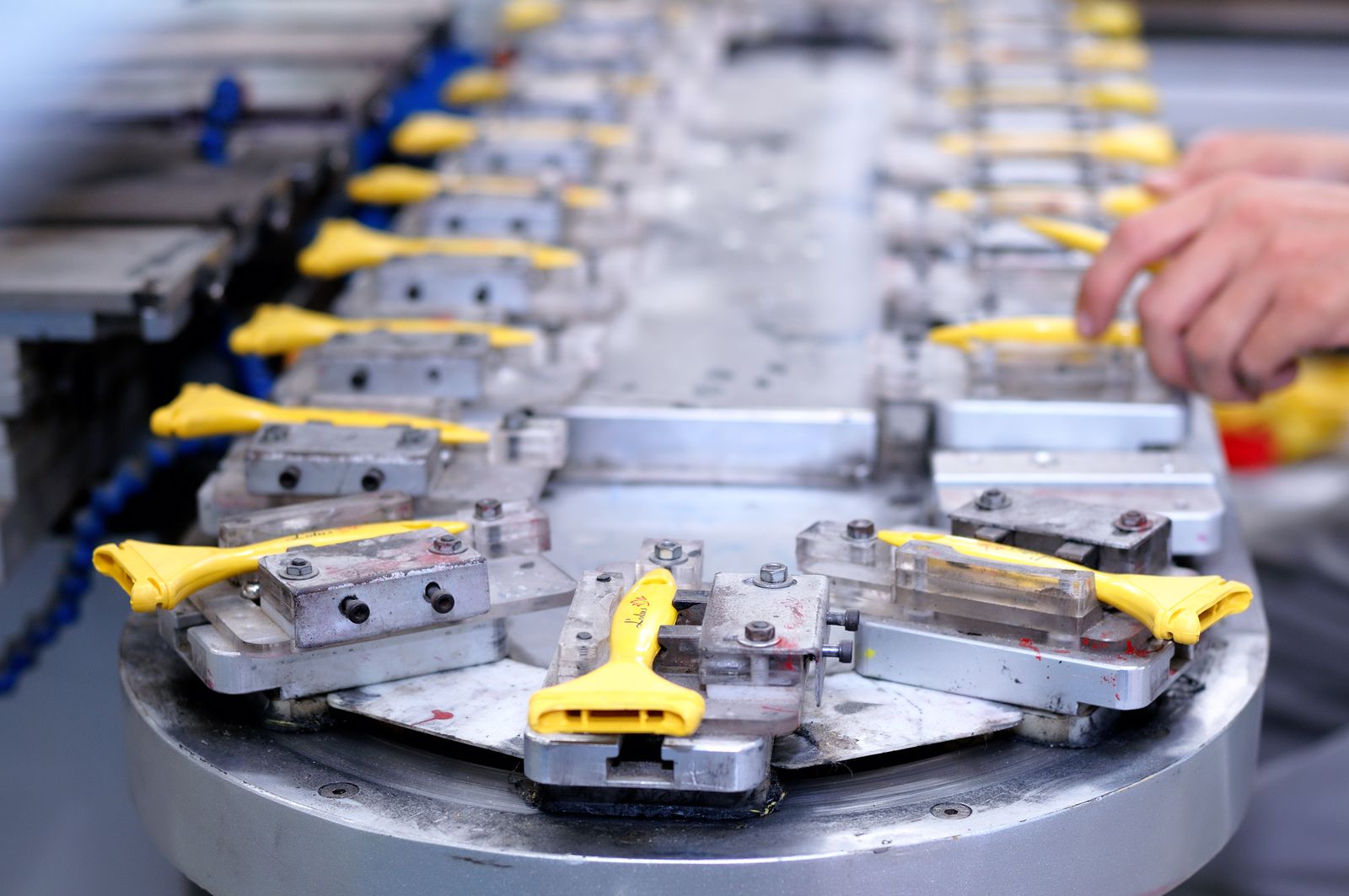
Automotive staffing for the whole plant.
Tier 1 and Tier 2 suppliers, assembly, stamping, machining, sequencing and battery. Production associates on the floor, containment crews when a shipment is on hold, and the technicians and engineers who keep the line running. Temporary, temp to hire, contract or direct. Written quote within 24 hours.
Sources: US Bureau of Labor Statistics, Current Employment Statistics, series CES3133600101 (employment, 962,800) and CES3133600107 (weekly hours, 45.6 versus 42.6 in August 2025), August 2026 preliminary, seasonally adjusted, Employment Situation release September 4, 2026. Cox Automotive, August 2026 sales forecast, September 2, 2026, seasonally adjusted annual rate. Quote turnaround is C3 Workforce policy.
Three situations we see every week in supplier plants.
Plants are running record hours on flat headcount. That is exactly when a screened bench of people who already know the work pays for itself.
Program launches and rate increases
A new program, a customer pulling ahead, a line adding a second shift. You need trained assemblers, press operators and material handlers on the floor in days, plus a quality or manufacturing engineer on contract until the launch settles.
Quality holds and containment
A customer puts a shipment on hold and you need twenty people who can read a print, use a gauge, follow a sort instruction and document what they found, by Monday. We staff containment crews with a working lead so your quality manager is not supervising twenty new faces.
Overtime that will not end
Production workers in motor vehicles and parts averaged 45.6 hours a week in August 2026. When the crew has been running six days for months, temp to hire relieves them now and converts to your payroll when the order book says so.
Flat headcount, record hours, and a product mix moving under the supplier base.
What the national numbers say about automotive manufacturing in September 2026, and what they mean for the person who has to staff a plant.
US motor vehicles and parts manufacturing employed 962,800 people in August 2026, down 4,500 from July and essentially unchanged from a year earlier. It was the only major durable goods category to lose jobs in a month when manufacturing as a whole added 16,000. That is not a demand problem. The August sales pace was 16.8 million, the strongest of 2026 and the sixth straight month above 16 million, the longest such streak since March 2020. Plants are meeting that demand with the people they already have.
The evidence is in the workweek. Production and nonsupervisory employees in motor vehicles and parts averaged 45.6 hours in August 2026, three full hours more than the 42.6 they worked in August 2025, and overtime reached 6.5 hours a week in July. Hourly earnings for the same group rose 5.0 percent over the year to $34.27, well ahead of the 3.3 percent gain for all private production workers. A plant manager reading those figures already knows what they mean: the crew is tired, the premium pay line is growing, and the next absence becomes a missed shipment.
The product mix is shifting under the supplier base. Hybrids took 15.7 percent of August 2026 sales, up 3.1 points in a year, while battery electric vehicles fell to about 6 percent from a record 10.6 percent share in the third quarter of 2025. Second quarter EV sales were down 20.5 percent from a year earlier. Battery cell and EV truck plants have been the first to cut shifts, while suppliers feeding hybrid, SUV and full size truck programs are running lean. New vehicle days supply fell to 73 at the start of September, the lowest since April 2025, with the tightest brands under 40 days. Lean inventory means those plants and their suppliers are running full.
Trade policy is the other variable. Imported automobiles and certain parts carry a 25 percent Section 232 tariff, and the parts tariff offset for vehicles assembled in the United States fell from 3.75 percent of MSRP to 2.5 percent on May 1, 2026 and expires April 30, 2027. Forecasters have nonetheless nudged North American production up: S&P Global Mobility raised its 2026 outlook by 22,000 units and 2027 by 224,000 in its August update. Technology is changing the floor at the same time. One US assembly plant has already run humanoid robots through more than 30,000 vehicle builds and moved them onto parts sequencing, and Ford designed its Universal EV platform for 40 percent fewer workstations and 15 percent faster assembly. Repetitive sequencing and material handling tasks shrink. Maintenance, controls and quality roles grow.
For an HR lead trying to staff a plant, the takeaway is that the 2026 market rewards speed and match quality more than raw headcount. Manufacturing job openings reached 580,000 in July 2026, up 36 percent in a year, while the economy had only 0.95 unemployed people for every opening. Internal manufacturing hiring takes about 49 days from posting to start. A plant that waits until the overtime log forces the decision is competing for the same assemblers, press operators and maintenance technicians as every other supplier on the same road, with a seven week lag built in.
Sources: US Bureau of Labor Statistics, Current Employment Statistics, series CES3133600101 (employment), CES3133600107 (weekly hours), CES3133600108 (hourly earnings) and CES3133600109 (overtime), August 2026 preliminary and July 2026, seasonally adjusted, Employment Situation released September 4, 2026; BLS Employment Situation Table B 8, production and nonsupervisory average hourly earnings, August 2026, percent changes computed from published dollar values; BLS Job Openings and Labor Turnover Survey, Table 1, July 2026, released September 1, 2026; unemployed per opening computed from BLS Current Population Survey and JOLTS, July 2026. Cox Automotive, August 2026 US auto sales forecast (September 2, 2026), Q2 2026 EV sales report (July 10, 2026) and August 2026 new vehicle inventory report (September 10, 2026); NADA Market Beat, August 2026 (September 9, 2026). US Department of Commerce, auto tariff offset process, June 12, 2025; Congressional Research Service IN12545 on Section 232 auto tariffs. S&P Global Mobility, North America light vehicle production forecast, August 2026 update. BMW Group press release on humanoid robot deployment, June 25, 2026; Ford Universal EV production system as reported by NBC News, August 11, 2025. iCIMS Insights Workforce Report, August 2026 (manufacturing time to fill, 49 days).July 2026, up from 5.9 hours in July 2025. The plant is buying the sixth day instead of the next hire.
Source: BLS CES series CES3133600109, July 2026 preliminary, seasonally adjusted.Start of September 2026. Tight inventory means assembly plants and their suppliers are running full, not trimming schedules.
Source: Cox Automotive vAuto, August 2026 new vehicle inventory report, September 10, 2026.July 2026. Fewer available workers than openings for the economy as a whole, which is why speed of hire decides who gets the trained operator.
Source: computed from BLS Current Population Survey (6.9 million unemployed) and JOLTS (7.271 million openings), July 2026, seasonally adjusted.Eight role families in an automotive plant, and what we check before we send anyone.
Every job title below hides a range of skill. A press operator who can set a die is a different hire from one who can only run it. Here is what each person actually does, the credentials that matter, what C3 screens for, and the shift patterns you should expect to staff.
Assemblers and line operators
On the floor. Builds subassemblies and finished parts at a station on a takt time, follows standardized work, torques fasteners to specification with DC tools, performs first piece and in process checks, logs defects and rotates stations through the shift.
What matters. Reading work instructions and simple prints, error proofing awareness, 5S habits, basic measuring tools. No formal certification, but customer specific training must be documented before the person touches a saleable part.
C3 screens for. Attendance history, the ability to stand and repeat for 8 to 12 hours, prior takt paced experience, and whether the candidate can follow a documented instruction without improvising.
Shifts. Two and three shift operations, often four 10 hour days, with weekend overtime during launches. Second and third shift are where supply is thinnest.
Press and stamping operators
On the floor. Runs progressive and transfer presses, loads coil or blanks, checks parts against check fixtures, watches for slugs, burrs and die marks, keeps tonnage monitors in range and assists the setup crew on die changes.
What matters. Die protection awareness, go and no go gauges, lockout and tagout training, hearing conservation, and a forklift or overhead crane certification for coil handling. At the setup level, die setting and quick die change experience.
C3 screens for. Heavy machinery experience, comfort around cranes and coil, PPE discipline, and whether the candidate understands what a die crash costs.
Shifts. Continuous operations. Third shift and weekend coverage are routine because presses run through shutdowns to build bank.
Weld cell and machine operators
On the floor. Loads fixtures in robotic weld cells, clears faults at the HMI, dresses tips, inspects welds visually and on a destructive test schedule. On the machining side, runs CNC centers on production parts, adjusts offsets for tool wear and charts SPC data.
What matters. Robot cell operation with teach pendant familiarity (Fanuc, ABB, Yaskawa), weld defect identification, calipers, micrometers and bore gauges, SPC entry, and for machining, offsets and basic G code reading.
C3 screens for. Fault recovery experience, a gauge reading check, and an explanation of what the candidate did the last time a cell went down mid shift.
Shifts. Two or three shift; cells run 20 hours a day at rate with a maintenance window.
Material handlers and sequencers
On the floor. Delivers parts lineside, kits and sequences to the customer broadcast, cycle counts, loads and unloads trailers, scans every move in the WMS and manages returnable containers.
What matters. Forklift, tugger and hi lo certification with a site evaluation on your equipment (OSHA 29 CFR 1910.178 puts that evaluation on the employer), RF scanner fluency, FIFO and lot control, reading a broadcast or ASN.
C3 screens for. Certification verification, the equipment types and lift heights actually run, and sequencing accuracy history. This is the role humanoid robot pilots are targeting first, so we look for people who can move up to inventory control.
Shifts. Staggered starts ahead of each line shift; sequencing centers run to just in time delivery windows around the clock.
Quality inspectors, sort and containment
On the floor. Inspects incoming, in process and final parts to a control plan, runs layouts and CMM programs, documents nonconformances, and leads sort and containment when a customer places a shipment on hold, feeding the 8D.
What matters. GD&T reading, calipers, micrometers, height gauges, CMM operation (PC DMIS or Calypso), PPAP and IATF 16949 exposure, certified stock labeling and containment documentation.
C3 screens for. A print reading exercise, the ability to explain a defect back to us in plain language, and gauge repeatability awareness. Containment leads are screened for having supervised a sort before.
Shifts. All shifts, and containment crews on 12 hour rotations at short notice. BLS projects about 66,700 openings a year nationally for inspectors, testers and sorters.
Maintenance technicians
On the floor. Troubleshoots downtime on presses, weld cells, conveyors and robots, runs preventive maintenance schedules, works hydraulics, pneumatics and electrical to 480 volts, and reads PLC faults to root cause rather than swapping parts.
What matters. Journeyman card or equivalent documented experience, PLC platforms (Rockwell, Siemens), robot recovery, welding and fabrication for repairs, authorized lockout and tagout, arc flash training to NFPA 70E.
C3 screens for. A troubleshooting scenario interview, an equipment list match to your floor, and references from maintenance supervisors, not just HR.
Shifts. Off shifts, weekends and shutdown weeks carry the load. BLS projects 18 percent growth for industrial machinery mechanics from 2025 to 2035, the fastest of any trade family.
Tool and die makers and CNC programmers
On the floor. Builds, repairs and tries out stamping dies, injection molds and fixtures; programs CNC machines in Mastercam or Siemens NX; holds tenths; runs die tryout and buyoff with the customer.
What matters. Completed apprenticeship or journeyman card, surface grinding, wire and sinker EDM, CAD reading, GD&T, and press or mold sizes worked.
C3 screens for. A walk through of dies or molds built, tolerances held, tryout experience and the software actually used, verified with the people who worked beside the candidate.
Shifts. Day shift with tryout call ins. BLS projects about 30,400 openings a year for machinists and tool and die makers nationally, nearly all of them replacing retirees.
Quality, manufacturing and controls engineers
On the floor. Launch support, PPAP submissions, PFMEAs and control plans, capability studies, cell design and cycle time work, robot and PLC programming, vision system integration and validation of AI inspection output.
What matters. Engineering degree or equivalent experience, IATF 16949 core tools (APQP, PPAP, FMEA, MSA, SPC), Rockwell Studio 5000 or Siemens TIA Portal, robot programming, AutoCAD or SolidWorks, and customer facing launch history.
C3 screens for. Programs launched, customer interactions handled, platforms programmed, and whether the candidate has lived through a line down with the customer on site.
Shifts. Days, with launch nights and weekends. Most go out on contract for a launch window or direct for a permanent seat. BLS projects 12 percent growth for industrial engineers, 2025 to 2035.
Four problems every supplier plant is fighting at once.
None of these is unique to your plant. All of them get worse when the hiring decision waits for the overtime report.
Overtime and the injury curve
Auto production workers averaged 45.6 hours a week in August 2026 and 6.5 hours of overtime in July. Peer reviewed research across 110,236 US job records found that overtime schedules carry a 61 percent higher injury hazard rate than jobs without overtime, and 12 hour days a 37 percent higher rate. Manufacturing already records 2.7 recordable injuries per 100 full time workers.
How C3 handles it. Temp to hire relief crews scheduled to take the sixth day, so the core crew's hours come down before the injury log, the workers compensation mod and the quit rate go up.
Sources: BLS CES series CES3133600107 and CES3133600109, August and July 2026. Dembe, Erickson, Delbos and Banks, Occupational and Environmental Medicine, 2005. BLS Survey of Occupational Injuries and Illnesses, 2024 data, manufacturing.Turnover that hides in the first year
Durable goods manufacturing turned over 27.2 percent of its workforce in 2025, the sum of twelve monthly BLS separation rates. The churn is concentrated early: 61 percent of jobs started by workers aged 18 to 24 ended in less than a year. A new assembler who leaves in week three costs a training slot, a supervisor's time and a hole on the line.
How C3 handles it. Recruiters who know the person, a screen for whether they have worked a takt paced line before, and check ins in the first weeks. The conversion decision is made on attendance and performance data, not a hunch.
Sources: BLS Job Openings and Labor Turnover Survey, total separations rate, durable goods manufacturing, twelve months of 2025 summed (FRED series JTU3200TSR). BLS National Longitudinal Survey of Youth 1979, released August 26, 2025.Customer specific requirements
IATF 16949 and the customer specific requirements layered on top of it demand documented training before anyone touches a part, certified stock labeling during containment and traceable sign offs on inspection. In Deloitte's 2026 Manufacturing Industry Outlook, more than a third of 600 executives named equipping workers with the needed skills as their top smart manufacturing concern.
How C3 handles it. The training, sign off and onboarding requirements go into the job order in the first call, so the associate arrives with the paperwork in place instead of chasing it in week two.
Source: Deloitte 2026 Manufacturing Industry Outlook, November 13, 2025, survey of 600 executives. IATF 16949 is the automotive quality management standard; no statistic is claimed for it.Technician demand outrunning supply
Deloitte and The Manufacturing Institute count nearly 500,000 open manufacturing technician positions in the United States today and 2.3 million technician openings to fill between 2025 and 2030, with technician employment growing six times faster than production occupations. Manufacturing job openings overall stood at 580,000 in July 2026, up 36 percent in a year.
How C3 handles it. A bench of screened maintenance, controls and tool and die people recruited ahead of demand, placed temp to hire, contract or direct, with contract to direct conversion available at any time.
Sources: Deloitte and The Manufacturing Institute, manufacturing technician study, September 10, 2026. BLS JOLTS Table 1, manufacturing job openings, July 2026 versus July 2025, seasonally adjusted.The floor, the quality lab and the launch team.
Michigan is where C3 started, and the supplier base is where we learned the trade. Since 2010 we have staffed Tier 1 and Tier 2 suppliers, stamping plants, machining shops, sequencing centers and assembly operations, and as we followed clients into new markets across the country we brought the same approach with us. We know what a PPAP is, why a customer specific requirement matters and what it costs when a line goes down for lack of a second shift crew.
Production
Quality
Skilled and technical

One bill rate. Everything an employer owes is inside it.
C3 Workforce is the employer of record
For every temporary, temp to hire and contract employee on your floor, we hire, pay, insure and, when necessary, dismiss. The wage is what the worker earns. Everything else moves to our desk. For direct placement, the hire is your employee from day one.
- Recruiting, interviews and skill evaluation
- Background and drug screening to your requirements
- E Verify and I 9 employment eligibility verification
- Payroll processing and W 2s
- Payroll taxes: FICA, FUTA and SUTA
- Workers compensation coverage
- Unemployment claims administration
- ACA tracking and 1095 C reporting
- Child support and wage garnishment processing
- A recruiter who checks in with you and the associate
Four steps from first call to a crew that stays.
No portal, no sales sequence. The person who takes your call is the person who works your order.
Consult
You talk to a salesperson, not an intake form. Plant, roles, shift, pay rate, customer requirements, and what has gone wrong with past hires. Written quote within 24 hours.
Source and screen
Relationships, not resumes. A recruiter who knows the person knows who will work second shift in a stamping plant. One standard: anyone we send should be qualified enough to work in our own office.
Start
Onboarding, payroll setup, safety orientation and required notices are handled before day one. Your supervisor meets someone who already understands the job, the PPE and the site rules.
Support
A recruiter checks in with you and the associate. If something is not working, call us. We respond within one business day.
What the market looks like right now.
Every figure is national, sourced and dated. Data as of September 13, 2026.
August 2026, preliminary. Down 4,500 from July and essentially flat from a year earlier (down 400). The only major durable goods category to decline in August.
Source: BLS Current Employment Statistics, series CES3133600101, Sept 4, 2026 Employment Situation release. Seasonally adjusted.Production and nonsupervisory employees in motor vehicles and parts worked 45.6 hours a week in August 2026 versus 42.6 in August 2025. Overtime reached 6.5 hours a week in July 2026. Plants are stretching crews rather than adding heads.
Source: BLS CES series CES3133600107 and CES3133600109, August 2026 (preliminary) and July 2026. Seasonally adjusted.Production and nonsupervisory pay in motor vehicles and parts rose $1.63 an hour over the year, from $32.64 in August 2025.
Source: BLS CES series CES3133600108, August 2026 (preliminary) versus August 2025. Seasonally adjusted.The seasonally adjusted annual rate topped 16 million for the sixth straight month. Hybrids took 15.7 percent of August sales while EV share fell to about 6 percent, and new vehicle days supply dropped to 73, the lowest since April 2025. Plants are running lean.
Source: Cox Automotive and NADA Market Beat, Sept 2 and Sept 9, 2026; Cox Automotive inventory report, Sept 10, 2026.Flat headcount on a 45.6 hour week means most supplier plants are one absence away from a missed shipment, not one hire away from being overstaffed. With sales holding above a 16 million pace and days supply at 73, the order book supports adding people through temp to hire now and converting them when 2027 volumes firm up, rather than paying for the sixth day indefinitely. Battery and EV dedicated lines are the exception. There, temporary and contract crews protect you from a shift cut you cannot yet rule out.
Straight answers.
Our September 2026 analysis of BLS and Cox Automotive data shows motor vehicle employment flat at 962,800 while the production workweek climbed three hours and sales ran at a 16.8 million pace, which is why supplier plants are turning to temp to hire instead of adding permanent heads.
Do you staff assembly plants or just suppliers?
Both, with most of our automotive volume in Tier 1 and Tier 2 supplier plants: stamping, machining, injection molding, sequencing, harness and battery operations. Assembly plants under a national labor agreement usually have less room to change staffing models, so their suppliers are where the demand for flexible headcount shows up first.
Can you staff a containment or sort project on short notice?
Yes. Tell us the part, the defect, the location and the count. We screen sorters by having them read a print, identify a feature, use a measuring tool and explain a defect back to us, and we can staff a crew with a working lead when you want one. Start dates depend on your screening requirements, and we give you a realistic one in the quote.
How do you handle customer specific requirements and PPAP?
We ask about them in the first call. If your customer requires documented training, specific inspection sign offs or a controlled onboarding for anyone touching the part, we build it into the job order so the associate arrives with the paperwork in place, not chasing it in week two.
Can a temporary worker move to our payroll?
Yes. Many supplier plants use a temporary assignment as a working interview. Ask about temp to hire and we will lay out the transition to your payroll before you place the order.
Do you place engineers and technicians, or only production?
Both. Quality, manufacturing and controls engineers go out on contract or direct placement, usually for a launch, a new cell or a plant move. Maintenance, controls and tool and die technicians go out temp to hire or direct. Same recruiters, same screening standard, whatever the placement type.
Which shifts can you staff, and is second or third shift harder?
All three, plus weekend and rotating patterns. Second and third shift are where supply is thinnest in every market we work, and the shift differential you offer matters more than most plants expect. We ask about the differential in the first call and tell you honestly what the candidate pool looks like for that shift at that rate. If the answer is that the rate will not attract people who stay, we say so before you place the order.
How do you handle drug screening and background checks?
To your written requirements. Some suppliers run a five panel, some a ten panel, some add a motor vehicle report for material handlers who drive on the yard. We will tell you what a stricter panel does to your candidate pool and start dates so you can make the tradeoff with open eyes, and the timeline in the quote reflects the screens you choose.
Who is responsible for safety training and PPE?
Both of us, and OSHA treats staffing companies and host employers as jointly responsible. We provide general safety training, verify certifications and will not send people into hazards they have not been trained for. You provide site specific hazard training, machine specific lockout and tagout, equipment evaluation and the PPE rules of your plant. A staffing company that tells you it assumes all safety liability is not telling you the truth.
What happens when a program ends or a shift is cut?
Temporary and contract associates roll off the assignment without a layoff on your books. C3 Workforce is the employer of record, so unemployment claims are ours to administer. Give us as much notice as you can and we will work to place the people somewhere else, which is better for them and for your reputation in the local labor pool the next time you need to staff up.
Do you staff automotive plants outside Michigan?
Yes. Michigan is where C3 started and Livonia is headquarters, but we are a nationwide staffing and recruiting company active in multiple markets across the country. As clients opened plants in other states we followed them, and the same recruiters and the same screening standard apply wherever the plant is.
How does the bill rate work for an automotive order?
One hourly bill rate per role and shift. It covers the associate's wage plus everything an employer owes: payroll taxes, workers compensation, unemployment, screening, onboarding and the recruiter's time. You see the wage and the rate side by side in the written quote, which goes out within 24 hours of the consult. Details are on our pricing page.
Pick the model that fits the plant.
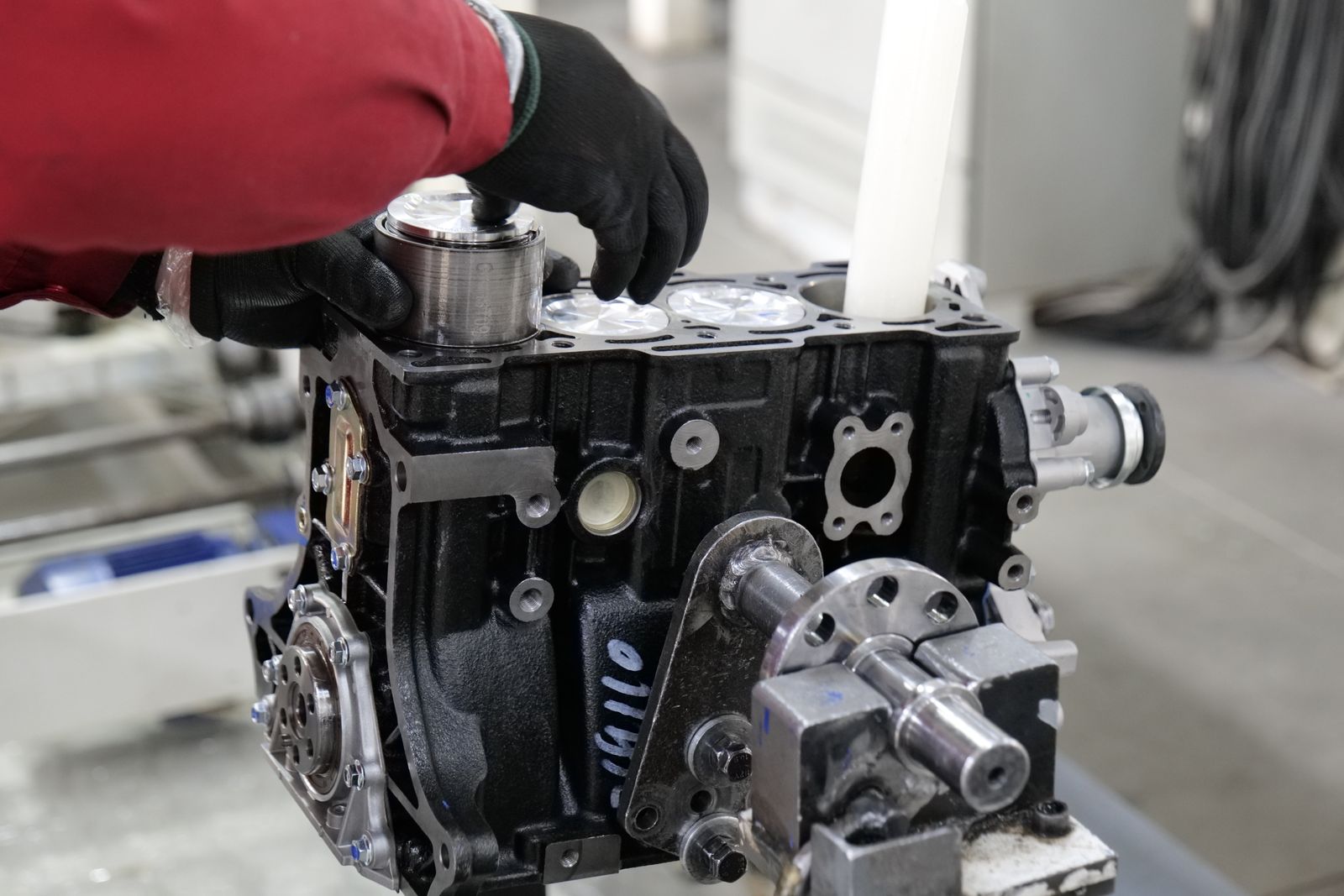
Tell us the plant. We’ll send the plan.
Most quotes go out within one business day. No pitch, no pressure. Just a number and a start date.