
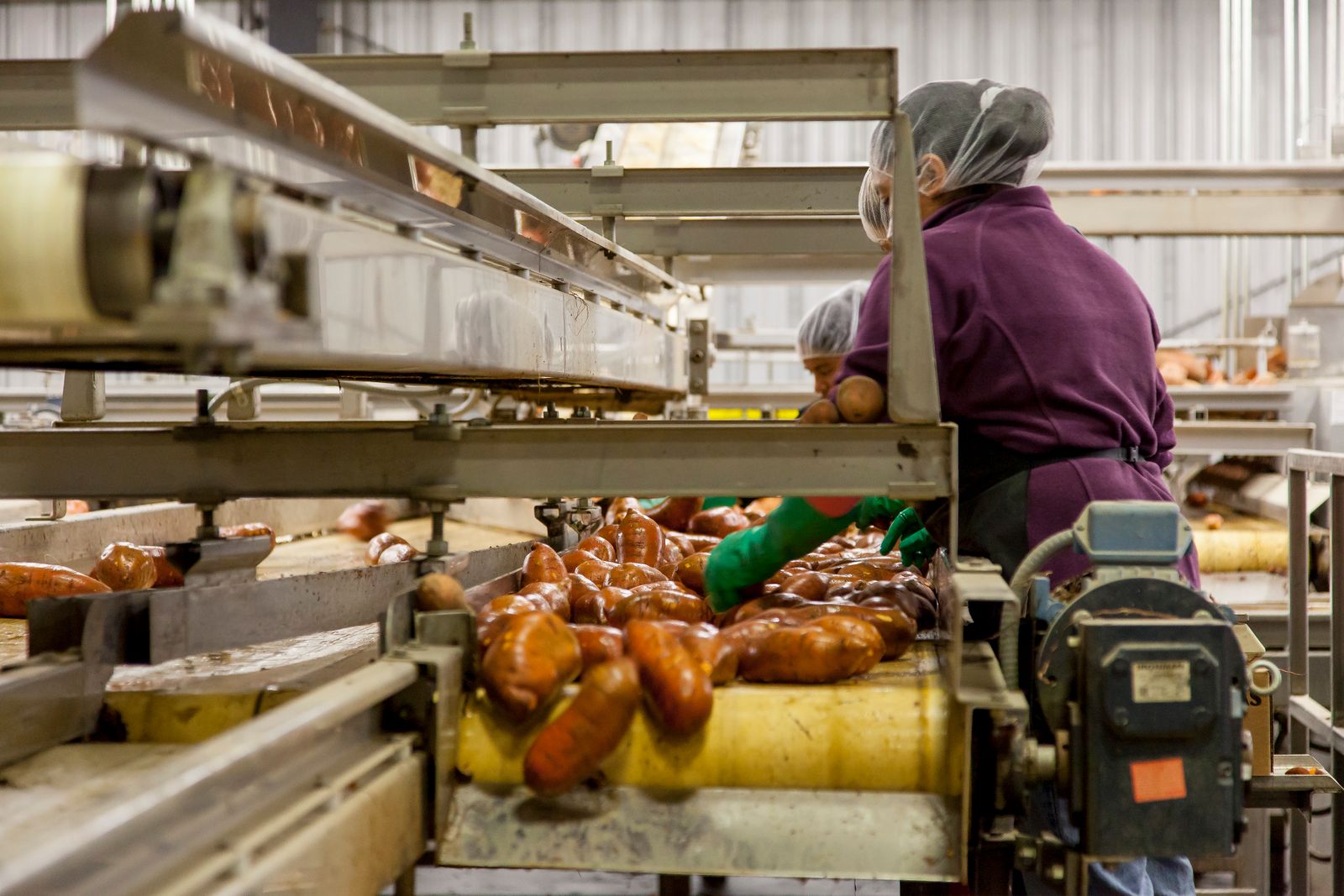
Production, sanitation, QA and maintenance for plants that never stop.
Food plants run around the clock, and the people who work in them need to understand GMP, allergen changeovers, lockout on a packaging line and why sanitation shift keeps the plant licensed. We screen for the cold, the wet and the 4 a.m. start before we place anyone. Written quote within 24 hours.
Sources: US Bureau of Labor Statistics, Current Employment Statistics, series CES3231100001, food manufacturing employment 1,764,600 in August 2026, preliminary, down 20,400 from 1,785,000 in August 2025, September 4, 2026 Employment Situation release, seasonally adjusted. BLS CES series CES3231100008, average hourly earnings of production and nonsupervisory employees, $24.78 in August 2026 versus $24.00 in August 2025, market data for hiring managers, not a rate for any specific job. BLS CES series CES3231100009, average weekly overtime, 4.2 hours, July 2026, preliminary; all manufacturing 3.1 hours from BLS Employment Situation Table B 2, August 2026. BLS Monthly Labor Review, industry employment projections 2024 to 2034, June 2026, food and beverage manufacturing up 6.2 percent from 2.1 million to 2.23 million jobs.
Three situations that send a plant manager looking for a staffing partner.
The market is moving in two directions at once. Legacy snack, cereal and beef plants are consolidating while dairy, protein beverage, confectionery and poultry operations are building large new plants that will hire through 2029. Both sides need flexible labor.
A new line or a new plant is coming online
A new dairy campus, a second packaging line, a co manufacturing contract that doubles volume. You need trained hands in hairnets before the equipment is fully commissioned, and you do not want to overhire before you know the real run rate. Temp to hire lets you staff the ramp and keep the people who prove out.
Third shift sanitation keeps turning over
Sanitation is the shift that keeps the plant licensed, and it is the hardest seat in the building to hold: overnight hours, chemicals, wet floors, cold rooms. We recruit for it specifically, we tell candidates exactly what the job is before they accept, and the ones we send tend to stay.
Harvest, holiday and promotional peaks
Produce packing at harvest, confectionery before the holidays, a retail promotion that pulls three months of volume into six weeks. Staff up for the peak with people who already understand GMP and step back down without layoffs when the volume passes.
Fewer jobs, higher pay, longer weeks and a shrinking pool of authorized workers. Food plants are short handed in a shrinking industry.
What is happening in US food manufacturing in 2026, in plain English, and what it means for the plant manager trying to fill sanitation shift.
Headcount is falling while the plants that remain run harder. Food manufacturing employed 1,764,600 people in August 2026, down 20,400 or 1.1 percent in a year, the lowest level since 2023 and down every month since April. Real output is down too: the Federal Reserve's production index for food was 1.6 percent below a year earlier in July, and capacity utilization slipped to 77.3 percent from 79.4 percent. Yet the people still on the floor are working more, not less. Production employees averaged 4.2 hours of overtime a week in July against 3.1 hours across all manufacturing, and average hourly earnings rose 3.25 percent to $24.78, faster than the 3.1 percent gain for all private workers. Plants are paying up and stretching crews to hold the people they have. Announced job cuts in the food sector reached 22,367 through August, up 75 percent from a year earlier, concentrated in beef packing, snacks and cereal.
The industry is moving in two directions. Legacy branded snack, cereal, soup and beef plants are closing or consolidating: one beef packer alone has cut more than 6,400 jobs since January, and the largest cereal and snack companies have guided fiscal 2027 sales flat to down. At the same time dairy, protein beverage, poultry, confectionery and private label plants are breaking ground on facilities that will hire through 2029. Demand explains both: 8.5 percent of US adults now report following a GLP 1 diet, double a year earlier, and 65 percent of them are actively seeking more protein, while store brands reached a record 23.8 percent unit share in the first half of 2026. Volume is leaving branded snacks for protein, dairy and co packers, which run leaner permanent headcounts and lean harder on flexible labor. BLS still projects food and beverage manufacturing to add 130,000 jobs between 2024 and 2034, the most of any manufacturing sector, with output up 22 percent, which is another way of saying automation will do more of the packing while people do more of the operating, sanitizing and maintaining.
Labor supply is the constraint, not demand. Hispanic or Latino workers were 30.1 percent of food manufacturing employment in 2025 and 37.4 percent of animal slaughtering and processing, against 18.7 percent of all manufacturing, and foreign born workers made up 19.1 percent of the US labor force. That workforce is shrinking. The foreign born labor force was down 379,000 over the year to August 2026, the Supreme Court allowed the termination of Temporary Protected Status for Haiti in 2026, and the seasonal H 2B program is no relief for year round plants: USCIS reached the cap for the first half of fiscal 2027 on September 4, 2026, after releasing 64,716 supplemental visas for fiscal 2026, about half the prior year. Enforcement has shifted from raids to paperwork, with I 9 form errors now treated as substantive violations, so a compliant employer of record is worth more than it was two years ago.
Regulation is adding work to the QA bench. Meat and poultry plants run under USDA Food Safety and Inspection Service rules that require HACCP plans and continuous inspection, and USDA proposed in February 2026 to permanently raise line speeds for young chicken, turkey and swine plants, which means more trained trimmers per shift, not fewer. FDA regulated plants operate under the Food Safety Modernization Act: preventive controls plans must be written and overseen by a Preventive Controls Qualified Individual, every employee who handles food must be qualified for the job under 21 CFR 117, and the FSMA 204 traceability rule takes effect July 20, 2028 with records due within 24 hours of a request. Layer on SQF Edition 10 audits and the 2027 deadlines to reformulate away from petroleum based dyes, and QA technicians, sanitation leads and food safety supervisors are in demand at plants that are otherwise cutting. Meanwhile USDA's own inspection workforce is thin: a June 2026 USDA report described an "unprecedented staffing crisis," and inspector availability now affects plant start times and second shift scheduling.
What it means for a plant manager or HR lead. Your competition for hourly workers is not the food plant across town. It is the durable goods plant paying about $30 an hour with a job openings rate of 5.2 percent against 3.1 percent in nondurables. Pay bands anchored to 2024 will not hold a sanitation shift, and a hiring process that cannot reverify work authorization on expiration will lose people mid assignment. The plants that are winning treat production and packaging as temp to hire with a working interview on the line, treat sanitation as a dedicated recruiting effort with honest expectations set before the first night, and run maintenance and QA technician openings as direct placement searches that start months before the new line is commissioned.
Sources: US Bureau of Labor Statistics, Current Employment Statistics, series CES3231100001, CES3231100008 and CES3231100009, August 2026 preliminary (overtime July 2026), seasonally adjusted, released September 4, 2026; all manufacturing and all private earnings from BLS Employment Situation Tables B 2 and B 8. Federal Reserve G.17 via FRED series IPG311A2S and CAPUTLG311A2S, July 2026. Challenger, Gray and Christmas, August 2026 job cuts report, September 2, 2026, food sector year to date. Company closure counts from University of Nebraska Center for Agricultural Profitability (December 22, 2025), KWQC (August 14, 2026) and Salt Lake Tribune (August 16, 2026); company fiscal 2027 guidance from FoodNavigator, September 4, 2026, and Food Industry Executive, August 26, 2026. Circana Eating Patterns in America via Food Dive, September 3, 2026. PLMA and Circana midyear report via FoodNavigator, July 9, 2026. BLS Monthly Labor Review, "Feeding the economy," June 2026, 2024 to 2034 industry projections. BLS Current Population Survey Table 18, 2025 annual averages; BLS Foreign Born Workers 2025; BLS Employment Situation Table A 7, August 2026, not seasonally adjusted. USCIS alert, September 11, 2026; DHS and DOL supplemental H 2B release for fiscal 2026 as reported February 5, 2026. Kutak Rock client alert on I 9 enforcement, May 22, 2026. USDA FSIS line speed proposal, February 2026, as reported April to July 2026. FDA, FSMA Preventive Controls for Human Food rule and FSMA 204 Food Traceability Rule, compliance date July 20, 2028. SQFI, Edition 10. FDA, tracker of dye reformulation pledges, September 10, 2026. Meatingplace, June 9, 2026, reporting the USDA staffing report. BLS JOLTS, July 2026, Table 1, nondurable and durable goods job openings rates. All figures national. Pay figures are national market data for hiring managers, not a rate for any specific job.Eight food plant roles, what each person actually does, and what we check before they put on a hairnet.
Every candidate is asked about cold, wet, standing, early starts and repetitive work before we place them. The technical roles get a second screen on the certifications and the equipment.
Production associates and line workers
- Does: works the line. Loading, sorting, trimming, inspecting product as it passes, hand packing, case packing, changeover cleanup and the housekeeping that keeps the line in GMP compliance. Stands for the shift, often in a cold or wet room.
- Credentials and skills: GMP basics (hairnet, beard net, jewelry, hand washing, no food or drink on the floor), allergen awareness, the ability to follow a work instruction and a line speed, and physical readiness for cold, standing and repetition. Prior food plant experience preferred. Knife skills and cut resistant glove discipline for trimming roles.
- We screen for: honesty about cold, wet and early starts, reliability history, and whether they understand why a hairnet rule is not optional.
- Schedule: all shifts, 8, 10 and 12 hour patterns, weekends on 24 hour plants. Temp to hire or temporary for peaks.
Machine, packaging and filling operators
- Does: runs the equipment. Fillers, baggers, cartoners, case packers, labelers, checkweighers, metal detectors and vision systems. Sets up and changes over between SKUs, clears jams, records downtime, checks code dates and seal integrity, and calls maintenance before a small fault becomes an hour of lost production.
- Credentials and skills: HMI operation, changeover and basic mechanical adjustment, weight and seal checks, metal detection verification, lockout tagout awareness, GMP and allergen changeover discipline. Experience with specific platforms (form fill seal, flow wrap, thermoform) matters and we ask about it.
- We screen for: a machine they ran and a jam they cleared, how they document downtime, and whether they know when to stop the line.
- Schedule: all shifts. Temp to hire, often converting to your payroll.
Batchmakers, mixers and cooks
- Does: follows a formula. Weighs and stages ingredients, runs mixers, kettles, ovens or fryers, monitors temperatures and times at critical control points, records batch sheets, manages allergen sequencing and reports deviations. The person whose mistake becomes a recall.
- Credentials and skills: scale and formula accuracy, HACCP awareness and critical control point recording, allergen control, sanitation between batches, forklift or pallet jack for ingredient staging, basic math for yield and scaling. ServSafe or a plant HACCP course is a plus.
- We screen for: attention to a written formula, how they handle a temperature that is out of range, and their record keeping habits.
- Schedule: early starts are common; all shifts. Temp to hire.
Sanitation technicians and sanitation leads
- Does: keeps the plant licensed. Breaks down equipment, pre rinses, applies foam and sanitizer at the right concentration and contact time, scrubs, rinses, inspects, swabs and reassembles under the master sanitation schedule. Works overnight between production shifts in wet, cold and chemical conditions. Leads run the crew, the chemical titration checks and the pre operational inspection sign off.
- Credentials and skills: chemical safety and PPE discipline, lockout tagout, confined space awareness for tanks and vessels, understanding of clean in place versus clean out of place, allergen cleaning validation, ATP swabbing and pre op inspection documentation. Leads need training records and the authority to hold a line that is not ready.
- We screen for: a straight answer about overnight hours, chemicals and wet floors before they accept, prior sanitation or industrial cleaning experience, and reliability.
- Schedule: third shift and weekends. Temp to hire; we recruit for this shift specifically.
QA technicians, food safety technicians and lab technicians
- Does: verifies the plan is working. Line checks on weights, temperatures, seals and codes, environmental monitoring and micro swabbing, allergen verification after changeovers, hold and release decisions, record review for the food safety plan, mock recalls and traceability exercises, and audit preparation.
- Credentials and skills: HACCP certification, PCQI training under the FSMA preventive controls rule, SQF practitioner or BRCGS familiarity, GMP auditing, environmental monitoring programs, basic microbiology and lab technique for lab technicians, and the documentation discipline that FSMA 204 traceability will demand.
- We screen for: a deviation they caught and how they handled the hold, comfort telling production the line is not running, and their record keeping.
- Schedule: every production shift needs QA coverage. Temp to hire for technicians, direct placement for food safety supervisors and SQF practitioners.
Maintenance technicians and industrial mechanics
- Does: keeps the line running and the plant cold. Preventive maintenance on fillers, conveyors, mixers and packaging equipment, electrical and mechanical troubleshooting, PLC fault finding, pump and valve work, boiler and ammonia refrigeration awareness, and the sanitary design habits (food grade lubricants, no loose hardware) that keep maintenance from becoming a contamination event.
- Credentials and skills: industrial maintenance or mechatronics training, electrical troubleshooting to 480 volts, PLC basics on Rockwell or Siemens, welding for sanitary stainless, pneumatics and hydraulics, refrigeration awareness, lockout tagout, and comfort working during sanitation windows. BLS projects this occupation up 14 percent through 2035 with about 51,900 openings a year, so expect competition.
- We screen for: a fault they diagnosed on their own, willingness to work the shift and the wet environment, and safety history.
- Schedule: all shifts and on call rotations. Direct placement or temp to hire.
Forklift operators, cold storage and shipping and receiving
- Does: moves ingredients in and finished goods out. Receiving with lot capture and temperature checks, putaway in dry, cooler and freezer zones, picking and staging, trailer loading with load quality checks, first expired first out rotation, and the scanning discipline that FSMA 204 traceability depends on.
- Credentials and skills: sit down and stand up forklift and reach truck certification, RF scanner and WMS use, freezer work tolerance (below 0 degrees Fahrenheit in many plants), pallet building, trailer inspection, and allergen segregation rules for storage.
- We screen for: certified equipment experience, freezer tolerance stated honestly, safety record and accuracy.
- Schedule: all shifts, heavy weekend and night shipping. Temp to hire or temporary for peaks.
Shift leads and production supervisors
- Does: runs the shift. Staffing the line, hitting the schedule and the yield, enforcing GMP and safety, coaching new associates, managing changeovers, filling out the shift report and being the person who decides at 4 a.m. whether the line starts with three people short.
- Credentials and skills: food plant supervision experience, HACCP and GMP training, OSHA 30 or equivalent, lockout tagout authority, scheduling and attendance management, basic continuous improvement tools, and the ability to lead a crew that includes temporary associates on their first week.
- We screen for: how they handled a short crew, a GMP violation and a quality hold, plus references from people who worked for them.
- Schedule: the shift they supervise, including nights. Direct placement or temp to hire.
Four reasons food plants stay short handed, and how we handle each one.
Hourly gap between food and all manufacturing production pay
Food production workers averaged $24.78 an hour in August 2026 against $30.37 across all manufacturing. The durable goods plant across town has a job openings rate of 5.2 percent, up from 3.2 percent a year earlier, while nondurable openings fell to 3.1 percent. When a machine operator can earn more assembling parts in a heated building, the food plant loses the people it just trained, and the 4.2 hours of weekly overtime the rest of the crew works is the cost of that gap.
How we handle it: we give you an honest read on where your rate sits before we recruit against it, we recruit people who want food plant work specifically rather than anyone with a pulse, and we set expectations about the environment before the offer so the person who starts is the person who stays.
Source: BLS Current Employment Statistics, series CES3231100008, August 2026 preliminary; all manufacturing production and nonsupervisory earnings from BLS Employment Situation Table B 8, August 2026. BLS JOLTS, July 2026, Table 1, durable and nondurable goods job openings rates. Pay figures are national market data for hiring managers, not a rate for any specific job.Injury and illness cases per 100 workers in food plants, versus 2.7 in all manufacturing
Food manufacturing's recordable injury rate runs 22 percent above the manufacturing average, and dairy plants (4.2) and beverage plants (3.7) run higher still. Sanitation is where the hardest conditions stack: overnight hours, wet floors, chemicals, cold rooms and equipment teardown. It is also the shift that keeps the plant licensed. Overtime at 4.2 hours a week, more than an hour above the manufacturing average, is what thin sanitation and production staffing looks like in the federal data.
How we handle it: we recruit for sanitation as its own job, not as leftover production candidates. Every candidate hears exactly what the shift, the temperature and the chemicals are before they accept, and our recruiter checks in after the first nights. The people we send to sanitation tend to stay because they knew what they were signing up for.
Source: BLS Survey of Occupational Injuries and Illnesses, 2024 industry rates per 100 full time equivalent workers, released January 22, 2026. BLS CES series CES3231100009, average weekly overtime, July 2026 preliminary; all manufacturing from BLS Employment Situation Table B 2, August 2026.Share of food manufacturing workers who are Hispanic or Latino, versus 18.7 percent of all manufacturing
Food plants depend on a workforce that is disproportionately foreign born, and that pool is shrinking. The foreign born labor force fell 379,000 in the year to August 2026, TPS for Haiti was allowed to end in 2026, the H 2B cap for the first half of fiscal 2027 was reached on September 4, 2026, and I 9 paperwork errors are now treated as substantive violations. Plants that hired TPS holders in 2022 to 2024 must reverify on expiration and backfill, often on second shift and sanitation.
How we handle it: C3 Workforce is the employer of record, and E Verify and I 9 verification are part of every placement. We track work authorization expirations on our associates and handle reverification, so a document lapse becomes our problem to manage and your line stays covered. Compliance is not a feature. It is the job.
Source: BLS Current Population Survey, Table 18, 2025 annual averages. BLS Employment Situation Table A 7, foreign born labor force, August 2026 versus August 2025, not seasonally adjusted. USCIS alert, September 11, 2026. Kutak Rock client alert, May 22, 2026, on I 9 enforcement. Supreme Court action on Haiti TPS as reported by AP, August 5, 2026.Projected growth for industrial maintenance mechanics, 2025 to 2035
BLS projects about 51,900 openings a year for industrial machinery mechanics, maintenance workers and millwrights, and says directly that automated machinery is expected to create jobs for them. Every palletizer, case packer and vision system a food plant installs to cover unfilled packing roles adds to the maintenance load, and QA technician demand rises with SQF Edition 10 audits, dye reformulation deadlines and FSMA 204 traceability. These are searches, not postings, and they compete with every other manufacturer in the region.
How we handle it: maintenance technicians, QA leads and food safety supervisors are direct placement searches run by recruiters who know a sanitary design from a machine shop, starting with people we already know and screening on the equipment and the certifications the job requires.
Source: BLS Occupational Outlook Handbook, industrial machinery mechanics, machinery maintenance workers and millwrights, 2025 to 2035 projections released August 27, 2026. FDA FSMA 204 Food Traceability Rule; SQFI Edition 10; FDA dye reformulation tracker, September 10, 2026.The line, the sanitation crew, the QA lab and the maintenance shop.
A line that runs 40 hours plus overtime every week, in a cold room, in a hairnet, with a 4 a.m. start is not a fit for everyone. Our recruiters ask about cold, about standing, about early starts and about repetitive work before they place anyone, because a person who quits on day three costs the plant more than an open seat.
Production and packaging
Sanitation and quality
Maintenance and warehouse
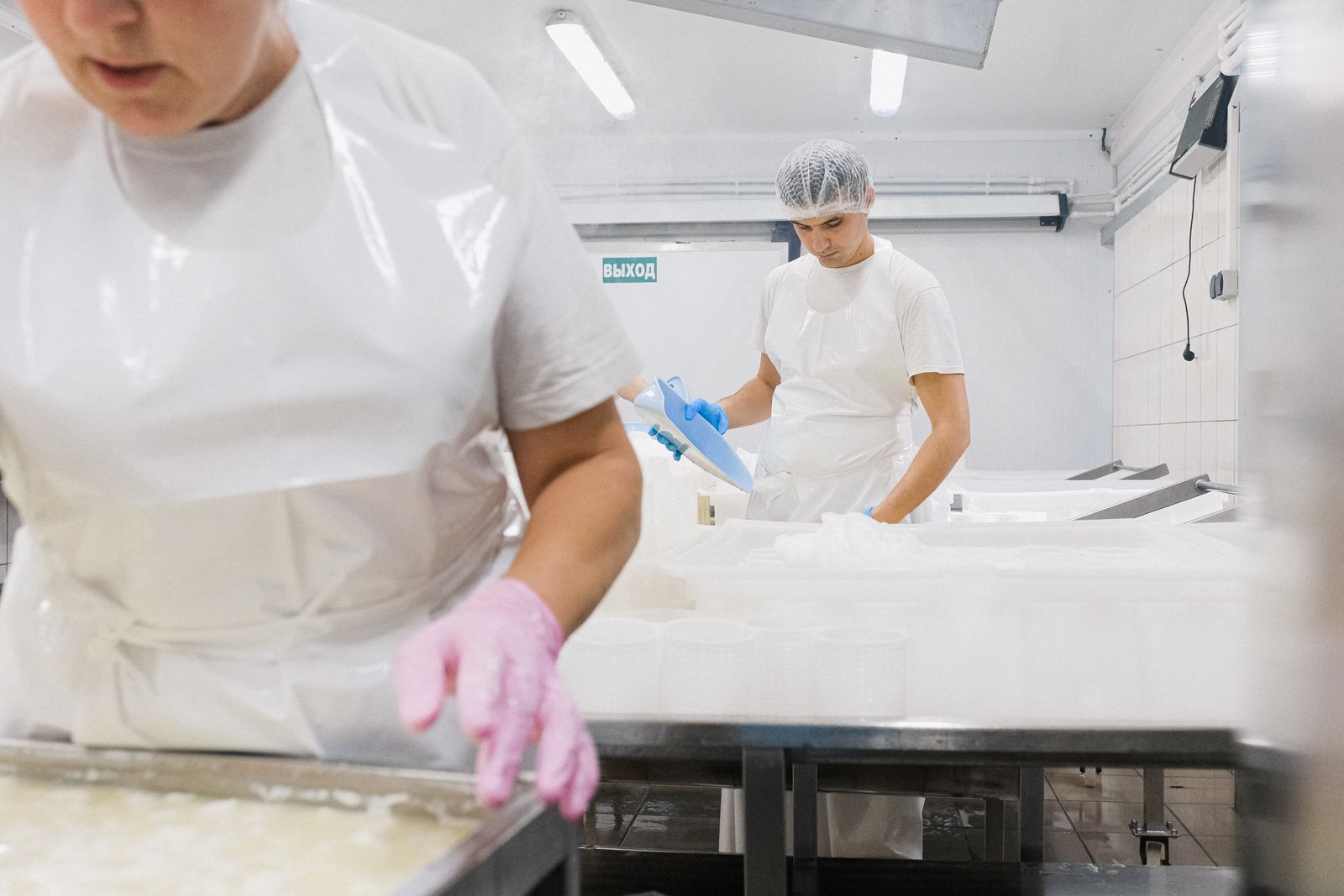
One bill rate. Everything an employer owes is inside it.
C3 Workforce is the employer of record
For every associate on assignment in your plant, we hire, pay, insure and, when necessary, dismiss. The wage is what the worker earns. Everything else moves to our desk, and every associate arrives knowing what a food plant expects.
- Recruiting, interviews and skill evaluation
- Screening for cold, wet, standing and early start environments
- GMP, hairnet, jewelry and hygiene expectations covered before day one
- Background and drug screening to your requirements
- E Verify and I 9 employment eligibility verification
- Payroll processing and W 2s
- Payroll taxes: FICA, FUTA and SUTA
- Workers compensation coverage
- Unemployment claims administration
- A recruiter who checks in with you and the associate
Four steps from first call to a crew that shows up for sanitation shift.
No portal, no sales sequence. The person who takes your call is the person who works your order.
Consult
You talk to a salesperson, not an intake form. Roles, shifts, pay rate, temperature, allergens, PPE, and what has gone wrong with past hires. Written quote within 24 hours.
Source and screen
Relationships, not resumes. A recruiter who knows the person knows who will work third shift in a cold room. One standard: anyone we send should be qualified enough to work in our own office.
Start
Onboarding, payroll setup, safety orientation and GMP expectations are handled before day one. Your supervisor meets someone who already knows the hairnet rule and where the hand wash station is.
Support
A recruiter checks in with you and the associate. If something is not working, call us. We respond within one business day.
What the market looks like right now.
Every figure is national, sourced and dated. Data as of September 13, 2026.
August 2026, preliminary. Down 20,400 from 1,785,000 in August 2025 and down every month since April 2026. The decline is concentrated in beef packing, snacks and cereal.
Source: BLS Current Employment Statistics, series CES3231100001, Sept 4, 2026 Employment Situation release. Seasonally adjusted.Production and nonsupervisory employees in food manufacturing, August 2026, up from $24.00 a year earlier. Plants are still paying up to hold labor even as headcount shrinks.
Source: BLS CES series CES3231100008, August 2026 (preliminary) versus August 2025. Seasonally adjusted.Food production employees averaged 4.2 hours of overtime a week in July 2026, more than a full hour above the manufacturing average. The signature of thin staffing on production and sanitation shifts.
Source: BLS CES series CES3231100009, July 2026 (preliminary); all manufacturing from BLS Employment Situation Table B 2, August 2026. Seasonally adjusted.A 6.2 percent gain, the most of any manufacturing sector, from 2.1 million to 2.23 million jobs while output rises 22 percent. Growth is concentrated in dairy, protein beverages, confectionery and poultry even as legacy beef, snack and cereal plants consolidate.
Source: BLS Monthly Labor Review, industry employment projections 2024 to 2034, June 2026.A shrinking industry with rising pay and 4.2 hours of weekly overtime is a labor supply problem, not a demand problem: plants are short of authorized, reliable people, not short of work. Anchor pay bands to what durable goods plants nearby are offering rather than to last year's rate, treat sanitation and maintenance as dedicated recruiting efforts rather than leftovers from production hiring, and make E Verify, I 9 discipline and reverification a requirement of any staffing partner you use. The plants adding lines through 2029 will be competing for the same people.
Sources: BLS Current Employment Statistics, food manufacturing, series CES3231100001, CES3231100008 and CES3231100009, August 2026 preliminary (overtime July 2026). BLS JOLTS, July 2026, durable and nondurable goods job openings rates.Straight answers.
Food plants shed 20,400 jobs in a year while raising production pay 3.25 percent, with beef and snack closures on one side, dairy and poultry openings on the other, and maintenance technicians and sanitation the hardest seats to fill.
Do your associates know GMP and food safety basics?
We cover GMP expectations, hairnets and beard nets, jewelry, hand washing, allergen awareness and reporting before anyone starts, and we prefer candidates who have worked in a food plant before. Your plant provides the site specific training your food safety plan requires. Tell us your requirements and we will build them into the screen.
Can you staff third shift and sanitation?
Yes, and we recruit for it specifically rather than sending day shift candidates and hoping. We tell every candidate what the shift, the temperature and the chemicals look like before they accept, which is why the people we send to sanitation tend to stay.
How fast can food production workers start?
It depends on the role, the shift and your screening requirements. Production and packaging roles with standard screening move fastest. Roles that need a specific certification, a forklift license or a client background check take longer. We give you a realistic start date in the quote rather than a promise we cannot keep.
What if a worker is not a fit?
Call your recruiter. We will talk through what happened and work on a replacement. We do not publish a blanket guarantee because every situation is different, and we would rather tell you exactly what we will do than hide behind fine print.
Can we hire an associate permanently?
Yes. Many food plants use the assignment as a working interview and move the people who prove out to their own payroll. Ask about temp to hire and we will lay out the transition before you place the order.
Do you place HACCP certified or PCQI trained QA technicians?
Yes. QA and food safety technicians are screened on their certifications and on the work: a deviation they caught, a hold they managed, the environmental monitoring program they ran. HACCP certification and PCQI training are asked for and verified. For SQF practitioner, food safety supervisor and lab lead roles we run a direct placement search, because those people are employed and are not reading job boards. Tell us which scheme you are certified under and we build the screen around it.
How do you handle work authorization and reverification?
C3 Workforce is the employer of record for every associate on assignment, so I 9 completion and E Verify are ours to do and ours to get right. We track work authorization expiration dates on our associates and handle reverification before a document lapses. If an associate's authorization cannot be reverified, we manage the separation and work on a replacement. You get a workforce that has been verified, and the paperwork risk sits at our desk rather than yours.
Can you staff a harvest or holiday peak and step back down afterward?
Yes. Tell us the volume, the dates and the roles and we will tell you in the quote what we expect to field on day one and how we will build from there. Associates on peak assignments are on C3 payroll, so when the volume passes the assignment ends without layoffs on your side and without a hit to your unemployment account. The earlier we know the peak is coming, the better the crew you get.
Do you staff USDA inspected meat and poultry plants?
Yes. We cover the basics of working under continuous inspection before anyone starts: what an inspector can stop, why the sanitation shift cannot run short, knife and cut resistant glove discipline, and the HACCP critical control points a trimmer or a packer touches. Your plant provides the site specific HACCP and SSOP training your plan requires. We also ask candidates plainly about cold, wet, standing and repetitive knife work, because a person who leaves on day two costs you more than an open seat.
Can your associates work in freezers and cold storage?
Yes, and we screen for it rather than discovering it on the first shift. Freezer work below zero, cooler work in the thirties and wet processing rooms are described to every candidate before they accept, and we ask about their prior experience in each. PPE expectations for cold rooms are set in the quote so there is no confusion about who supplies what on day one.
What happens if an associate breaks a GMP rule on your floor?
Tell your recruiter right away. A first hairnet, jewelry or hand washing violation is a coaching conversation we have with the associate, documented. A repeat, or anything that touches food safety directly, is a removal from the assignment. We would rather lose an assignment hour than put your license or your customer audit at risk, and we cover GMP expectations before the first shift precisely so this is rare.
Who provides smocks, boots and PPE?
It depends on your plant's GMP program and we settle it in the quote. Many plants supply captive smocks, hairnets and boots so nothing crosses the threshold from outside; others expect the associate to arrive with steel toe boots and we provide guidance on that. Cut resistant gloves, hearing protection and chemical PPE for sanitation are specified by your safety program. We make sure the associate knows exactly what to bring and what will be waiting.
Three ways to bring people into the plant.
Tell us the role. We’ll send the plan.
Most quotes go out within one business day. No pitch, no pressure. Just a number and a start date.