
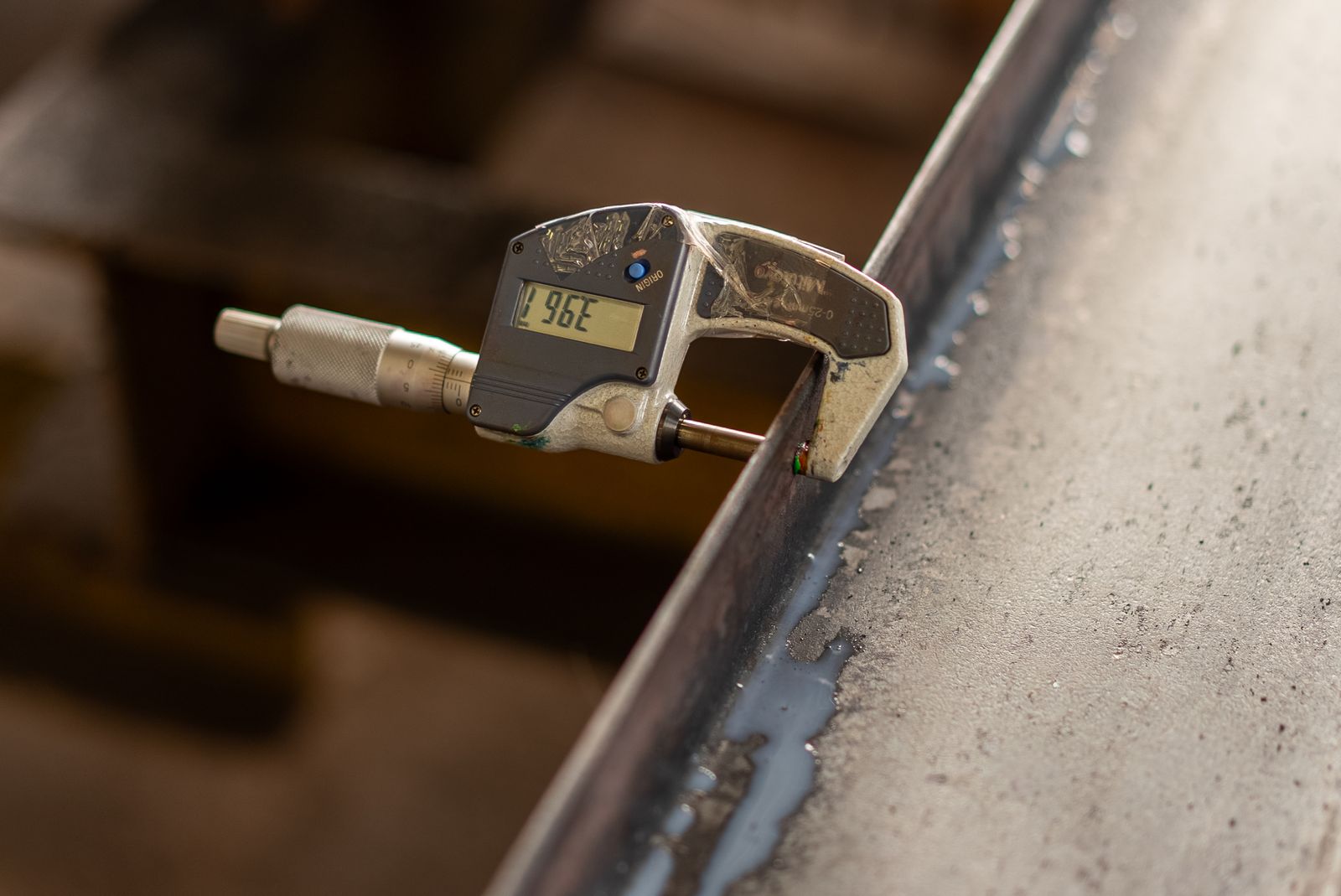
Inspectors, sorters and containment crews. A C3 specialty.
When a customer puts a shipment on hold, you need people who can read a print, use a gauge, follow a sort instruction exactly and document what they found. In numbers, on short notice, for three days or three months. Written quote within 24 hours.
Sources: US Bureau of Labor Statistics, Occupational Outlook Handbook, quality control inspectors, 602,000 jobs in 2025 and about 66,700 openings a year, 2025 to 2035 projections released August 27, 2026. BLS Current Employment Statistics, series CES3133600109, average weekly overtime of production and nonsupervisory employees in motor vehicles and parts, 6.5 hours, July 2026, preliminary, seasonally adjusted, versus 3.1 hours for all manufacturing (BLS Employment Situation Table B 2, August 2026). Quote turnaround is C3 Workforce policy.
Three situations that put a quality manager on the phone with us.
Quality inspection and rework is a specialty for us, not a side line. Most agencies are not built for it. We are.
A shipment is on hold and the customer wants it sorted now
A defect found at the customer, a suspect lot, a 100 percent sort before anything else ships. You need twenty people who can follow a sort instruction and document results, and you need them before the next truck. We staff containment crews with a working lead when you want one, so your quality manager is not supervising twenty new faces.
Inspection stations that turn over too often
Receiving inspection, in process checks, final audit, layout. Sorting parts for eight hours is a skill, and attention span is part of the screen. For ongoing inspection we look for the detail oriented people who stay, and we place them temp to hire so you can evaluate before they join your payroll.
CMM, quality engineering and supplier quality
A CMM programmer for a new part family, a quality engineer for a launch or a PPAP push, a supplier quality engineer to live at a struggling vendor. Contract or direct placement, recruited by people who know what AS9100, first article inspection and customer specific requirements actually demand of the hire.
Faster lines, longer weeks and tighter customer standards. Quality work is growing while the people who do it are retiring.
What is happening in US quality inspection, containment and rework in 2026, and what it means for a quality manager holding a shipment.
The inspection workforce is large and mostly replacing itself. Inspectors, testers, sorters, samplers and weighers held 602,000 jobs in the United States in 2025. BLS projects the occupation to grow just 3 percent through 2035 but to generate about 66,700 openings a year, almost all of them replacement for people who retire or move on. Across all production occupations BLS expects nearly one million openings a year over the decade, again mostly replacement. That is the structural fact under every containment call: the experienced inspector who could read your print and run your gauge is leaving faster than the trade is training new ones, and the work is not going away.
Automotive is running long and holds follow. Motor vehicles and parts employment was 962,800 in August 2026, flat over the year, while production workers averaged a 45.6 hour week, up three hours from a year earlier, with 6.5 hours of weekly overtime in July against 3.1 hours for all manufacturing. Plants are stretching crews rather than hiring, and stretched crews are where defects, suspect lots and customer holds originate. Under IATF 16949, the quality management standard every automotive OEM flows down to its suppliers, a nonconformance at the customer triggers containment, a documented sort, an 8D and often a PPAP resubmission, and the customer specific requirements that sit on top of the standard dictate how the sort is run and recorded. The supplier has to field a trained crew on short notice while its own people are already working 45 hours.
Aerospace is adding people and adding inspection with them. Aerospace product and parts manufacturing employed 594,500 people in July 2026, up 4.6 percent over the year while all of manufacturing grew 0.2 percent. Boeing reported a record $715 billion backlog at midyear and moved the 737 line toward 47 a month; through August it had delivered 418 airplanes, its best pace since 2018. Every rate step scales AS9100 quality system work, AS9102 first article inspection and customer source inspection down the supply chain, and the AIA and McKinsey study of the sector found attrition near 15 percent in 2024 with engineering and skilled trades the hardest roles to fill. Machinists, NDT inspectors and quality engineers with GD&T, CMM and AS9100 experience are the people engine and casting suppliers are hiring for now.
Automation moves inspection, it does not end it. US factories installed about 38,000 industrial robots in 2025, up 11 percent, and vision systems are taking over repetitive in process checks. But a containment sort on a suspect lot, a rework operation on a returned part and a first article layout on a new part family are still done by people with a print, a gauge and a documentation sheet. What changes is the skill mix: more CMM programmers, more gauge and calibration technicians and more quality engineers who can validate a vision system, alongside the sorters who still do the hands on work when a hold hits. Manufacturing turned over 29.3 percent of its workforce in 2025, so even a stable inspection department is rebuilding itself every three to four years.
What it means for a quality manager or plant manager. Two decisions matter. First, have a containment partner before the hold, not after, because the day the customer calls is the wrong day to start vetting agencies and the wrong day to pull your own inspectors off their stations. Second, separate the ongoing inspection seats from the containment surge: stations that turn over belong in temp to hire so you evaluate attention span on the sort table, and technical roles like CMM programming and quality engineering are direct placement searches that take weeks and should start before the launch or the audit. Both start with the same call.
Sources: US Bureau of Labor Statistics, Occupational Outlook Handbook, quality control inspectors, 2025 employment and 2025 to 2035 projections released August 27, 2026. BLS Career Outlook, "Producing the goods of the future," May 2026, production occupation openings 2024 to 2034. BLS Current Employment Statistics, motor vehicles and parts, series CES3133600101, CES3133600107 and CES3133600109, August and July 2026 preliminary, seasonally adjusted; all manufacturing overtime from BLS Employment Situation Table B 2, August 2026. BLS CES series CES3133640001, aerospace product and parts manufacturing, July 2026 preliminary. Boeing second quarter 2026 results, July 28, 2026; Forecast International, August 2026 deliveries, September 9, 2026. Aerospace Industries Association and McKinsey, June 16, 2025, 2024 data. International Federation of Robotics, US installations 2025, May 2026. BLS JOLTS, manufacturing total separations, twelve monthly rates summed for calendar 2025. IATF 16949, AS9100 and AS9102 are the published industry standards; no statistic is claimed for them. All figures national.Eight quality roles, from the sort table to the quality office, and what we check before you meet anyone.
Every one of these people is screened on a print, a measuring tool and a defect before we send them. The technical roles get a second screen on the software, the equipment and the standard.
Quality inspectors: receiving, in process and final
- Does: checks parts against the print and the control plan at receiving, at the station or at final audit. Uses calipers, micrometers, height gauges, pin gauges, thread gauges and fixtures; records results; tags and quarantines nonconforming material; stops the line when the plan says to.
- Credentials and skills: blueprint and GD&T reading, gauge use and care, basic SPC and control chart reading, ASQ Certified Quality Inspector (CQI) for senior seats, familiarity with IATF 16949 or AS9100 documentation, ISO 9001 awareness, forklift or crane certification where receiving requires it.
- We screen for: we hand them a print and ask them to find a feature and its tolerance, then measure a part with the right tool and explain a defect back to us.
- Schedule: all shifts. Temp to hire for ongoing stations.
Sorters and containment associates
- Does: performs 100 percent inspection on a suspect lot under a written sort instruction. Visual and gauge checks for a defined defect list, good and reject counts by container, defect tallies by type, labeling and certification stickers, repacking to the customer's standard.
- Credentials and skills: the ability to follow a sort instruction exactly for a full shift, count accurately, spot a visual defect at the boundary sample, use a go and no go gauge, and keep the documentation clean. Prior containment or inspection experience preferred; hairnets and PPE discipline where the site requires it.
- We screen for: attention span and honesty. A sorter who guesses or skips a container creates a second hold. We ask about the longest repetitive task they have held and check references.
- Schedule: any shift, weekends and 24 hour coverage when the customer demands it. Temporary staffing for the duration of the hold.
Containment working leads
- Does: runs the crew so your quality manager does not have to. Sets up the sort area, trains the crew on the instruction and boundary samples, audits sorted containers, keeps the hourly counts and the defect tallies, reports to your quality contact and the customer's representative, and manages crew size as the hold grows or shrinks.
- Credentials and skills: prior lead or supervisor experience in inspection or containment, strong documentation habits, comfort with customer facing reporting, knowledge of IATF containment expectations such as controlled shipping levels, and enough print reading to answer the crew's questions.
- We screen for: a hold they ran before, how they handled a sorter who was passing rejects, and whether their paperwork would survive a customer audit.
- Schedule: matches the crew. Temporary or temp to hire.
Rework and repair technicians
- Does: brings nonconforming parts back into specification under an approved rework instruction. Deburring, hand finishing, thread chasing, component replacement, torque and retorque, reinspection and relabeling, with traceability from the quarantine tag to the certified container.
- Credentials and skills: hand tool and power tool skill, print reading, torque specification discipline, the patience for repetitive fine work, and an understanding that rework without an approved instruction is scrap. Soldering or harness rework may need IPC certification; aerospace rework needs AS9100 traceability habits.
- We screen for: hands on skill on a sample part, willingness to follow the instruction rather than improvise, and reinspection discipline.
- Schedule: any shift, often alongside a containment crew. Temporary or temp to hire.
CMM operators and CMM programmers
- Does: operators load and run existing programs, read results and flag out of tolerance features. Programmers write and prove out new programs from the CAD model and the print, build fixtures and alignments, handle first article layouts and support PPAP dimensional reports and AS9102 forms.
- Credentials and skills: PC DMIS, Calypso, MCOSMOS or Polyworks; GD&T to ASME Y14.5 at a working level; CAD model handling; understanding of datum structures and alignment strategy; vision and laser scanning systems for some shops; ASQ CQT or CQI is a plus.
- We screen for: which software they programmed from scratch, a difficult alignment they solved, and whether they can explain why a feature read out of tolerance when the part was good.
- Schedule: days for programmers, all shifts for operators. Contract or direct for programmers, temp to hire for operators.
Layout inspectors, gauge and calibration technicians
- Does: performs full dimensional layout on surface plates and height gauges, runs the gauge lab, manages calibration schedules and records, performs gauge R&R and MSA studies, and keeps the plant's measuring equipment audit ready under IATF 16949 clause 7.1.5 or the AS9100 equivalent.
- Credentials and skills: deep GD&T, surface plate layout technique, calibration software, ISO/IEC 17025 awareness, MSA methods, optical comparators and vision systems, meticulous record keeping.
- We screen for: layout of a sample feature from datums, a calibration finding they resolved, and how they handle an inspector who does not want the gauge pulled for service.
- Schedule: mostly days. Temp to hire or direct placement.
Quality engineers and supplier quality engineers
- Does: owns the quality system for a product line or a supplier base. PPAP and APQP in automotive, first article and source inspection in aerospace, 8D and root cause on customer complaints, control plans and PFMEA, layered process audits, customer portals, and the plant's answer during a registrar or customer audit.
- Credentials and skills: ASQ Certified Quality Engineer (CQE) or Certified Quality Auditor (CQA), IATF 16949 or AS9100 internal auditor training, core tools (APQP, PPAP, FMEA, MSA, SPC), GD&T, statistical software, and the writing skill to make an 8D read well to a customer.
- We screen for: a PPAP or FAI package they built, an 8D that actually stopped the recurrence, and how they handled a customer engineer who did not accept the corrective action.
- Schedule: days, with travel for supplier quality. Direct placement or contract for a launch.
Quality managers and PPAP coordinators
- Does: the manager owns the quality management system, the registrar relationship, the customer scorecard and the department. The PPAP coordinator owns submission timing, document packages and customer portal status across programs so launches do not slip on paperwork.
- Credentials and skills: management representative experience under IATF 16949 or AS9100, lead auditor training, customer specific requirement knowledge for the OEMs or primes you serve, scorecard and warranty analysis, and a record of building a team rather than just surviving audits.
- We screen for: an audit they led with a major finding and how they closed it, scorecard improvement they can show, and references from people who worked for them.
- Schedule: days. Direct placement, often confidential.
Four reasons quality work is hard to fill, and how we handle each one.
Weekly overtime in auto plants, where the holds start
A containment call comes the day the customer finds the defect, and it needs twenty trained people before the next truck. The plant's own inspectors are already on a 45.6 hour week with 6.5 hours of overtime, double the manufacturing average, so pulling them onto a sort creates a second gap at the station they left. Most staffing agencies are built for steady production orders, not for a crew that has to read a sort instruction on day one and scale up or down with the hold.
How we handle it: containment is a specialty for us. We maintain a bench of inspectors and sorters we have already screened on a print and a gauge, we field a working lead when you want one, and we size the crew to the hold rather than to a fixed order.
Source: BLS Current Employment Statistics, motor vehicles and parts production workers, weekly hours August 2026 and overtime July 2026, preliminary, seasonally adjusted; all manufacturing overtime from BLS Employment Situation Table B 2, August 2026.US manufacturing turnover, 2025
Manufacturing separated 29.3 percent of its workforce in 2025, summing the twelve monthly BLS rates, and inspection stations turn over faster than the plant average because sorting parts for eight hours is a skill not everyone has. Deloitte found 60 percent of manufacturing HR leaders put the cost of replacing a skilled frontline worker at $10,000 to $40,000. Every inspector who quits at week three costs the plant a training cycle and, often, an escape to the customer.
How we handle it: attention span is part of our screen. We ask about the longest repetitive task a candidate has held, we tell them exactly what eight hours on a sort table is like, and we place ongoing inspection seats temp to hire so you evaluate on the table before the person joins your payroll.
Source: BLS Job Openings and Labor Turnover Survey, manufacturing total separations rate, twelve monthly not seasonally adjusted rates summed for calendar 2025 (FRED series JTU3000TSR). Deloitte, 2025 Manufacturing Industry Outlook, November 2024.Aerospace manufacturing employment growth in a year
Aerospace product and parts employment rose 4.6 percent to 594,500 in the year to July 2026 while all manufacturing grew 0.2 percent, and the sector reports attrition near 15 percent with engineering and skilled trades hardest to fill. Automotive suppliers, engine shops and defense primes are all recruiting the same CMM programmers and quality engineers at the same time, and BLS expects 66,700 inspector openings a year through 2035 just to replace the people leaving.
How we handle it: technical quality roles are direct placement or contract searches run by recruiters who know PC DMIS from Calypso and PPAP from AS9102. We start with people we already know and screen on the software, the equipment and the part family before you spend an interview hour.
Source: BLS CES series CES3133640001, July 2026 preliminary, seasonally adjusted; total manufacturing from BLS Employment Situation Table B 1, August 2026. Aerospace Industries Association and McKinsey, June 16, 2025, 2024 data. BLS Occupational Outlook Handbook, quality control inspectors, 2025 to 2035 projections.Industrial robots installed in US plants in 2025, up 11 percent
Automation is pushing routine checks onto vision systems while the human work concentrates in containment, rework, layout and the documentation that IATF 16949, AS9100 and customer specific requirements demand. A temporary inspector on your floor is inside your quality system: training records, sort instruction acknowledgment and documentation format all have to hold up when the customer or the registrar audits the hold. Generic staffing does not know that.
How we handle it: we review your sort instruction, boundary samples and documentation format before day one, brief the crew on the standard your customer works under, and keep the training acknowledgments your auditor will ask for. The quality system stays yours. The crew arrives ready to work inside it.
Source: International Federation of Robotics, US robot installations 2025, released May 2026. IATF 16949, AS9100 and AS9102 are published industry standards; no statistic is claimed for them.From the sort table to the CMM to the quality office.
Screening for this work is specific. We ask candidates to read a print, identify a feature, use a measuring tool and explain a defect back to us. We know the standards our clients live under: PPAP and customer specific requirements in automotive, AS9100 and first article inspection in aerospace, HACCP and hold procedures in food.
Inspection and containment
Measurement
Engineering and leadership

What a C3 containment crew arrives with.
C3 Workforce is the employer of record
For every inspector and sorter on assignment, we hire, pay, insure and, when necessary, dismiss. You get one hourly bill rate for hours worked and a crew that already understands the job when it walks in.
- People screened on print reading, gauge use and defect identification
- A working lead on the crew when you want one
- Review of your sort instruction and documentation format before day one
- Crews that scale up or down as the hold changes
- Background and drug screening to your requirements
- E Verify and I 9 employment eligibility verification
- Payroll, payroll taxes and W 2s
- Workers compensation coverage
- Unemployment claims administration
- A recruiter who checks in with your quality manager and the crew
Four steps from a hold notice to a crew on the sort table.
No portal, no sales sequence. The person who takes your call is the person who works your order.
Consult
Tell us the part, the defect, the location, the count and the shift. Whether you need a lead. Whether the work is at your plant, the customer's dock or a third party warehouse. Written quote within 24 hours.
Source and screen
We pull from inspectors and sorters we already know and screen every new person on a print, a gauge and a defect. One standard: anyone we send should be qualified enough to work in our own office.
Start
Onboarding, payroll setup, safety orientation and PPE are handled before day one. The crew arrives knowing the sort instruction and the documentation you need, and the lead knows who to report to.
Support
A recruiter checks in with your quality manager and the crew. As the hold grows or shrinks, the crew size follows. If something is not working, call us. We respond within one business day.
What the market looks like right now.
Every figure is national, sourced and dated. Data as of September 13, 2026.
Inspectors, testers, sorters, samplers and weighers held 602,000 jobs in 2025 at a median $48,570 a year ($23.35 an hour), with about 66,700 openings a year projected through 2035, mostly replacement.
Source: BLS Occupational Outlook Handbook, quality control inspectors, May 2025 OEWS medians and 2025 to 2035 projections.Production occupations are expected to generate nearly one million openings a year from 2024 to 2034, mostly to replace workers who leave. Inspectors, testers and sorters account for about 69,900 of them.
Source: BLS Career Outlook, "Producing the goods of the future," May 2026.Boeing passed the FAA capstone review for a 737 rate of 47 a month in May 2026 and returned the 787 to 8 a month with a target of 10. Every rate increase scales source inspection and first article work down the supply chain.
Source: Air Data News, May 27, 2026, reporting Boeing CEO Kelly Ortberg's statement.About 66,700 inspector openings a year, nearly all replacement, means the experienced inspector you rely on is retiring and the trade is not training a successor fast enough. Auto plants running 6.5 hours of weekly overtime and aerospace rates climbing put more suspect lots and more first article work on the same shrinking pool. The practical response is to line up a containment partner before the next hold, move ongoing inspection stations to temp to hire so you evaluate attention on the table, and start CMM and quality engineering searches before the launch or the audit rather than after.
Sources: BLS Occupational Outlook Handbook, quality control inspectors, 2025 to 2035 projections released August 27, 2026. BLS Current Employment Statistics, motor vehicles and parts production worker overtime, July 2026 preliminary.Straight answers.
US motor vehicles and parts production workers average 45.6 hours a week with 6.5 hours of overtime on flat headcount, and stretched crews are where defects, holds and containment work begin.
How fast can a containment crew start?
It depends on the count, the location, the shift and your screening requirements. Standard screening moves fastest. A client background check or a specific certification takes longer. We give you a realistic start date in the quote rather than a promise we cannot keep, and we tell you what crew size we can field on day one and how quickly we can grow it.
Can the crew work at the customer's site or a third party warehouse?
Yes. Containment often happens at the customer's receiving dock, a sequencing center or a sort facility rather than your plant. Tell us where the parts are and who controls the site, and we will handle the orientation and site rules for that location.
Do your inspectors know our industry's standards?
We staff quality roles for automotive suppliers, aerospace shops, food plants and distribution centers, and we screen against what each one demands: PPAP and customer specific requirements, AS9100 and first article inspection, HACCP and hold procedures. For technical roles like CMM programming and quality engineering, we screen on the software, the equipment and the part families the job requires.
What if an inspector is not a fit?
Call your recruiter. We will talk through what happened and work on a replacement. We do not publish a blanket guarantee because every situation is different, and we would rather tell you exactly what we will do than hide behind fine print.
Can we hire an inspector permanently?
Yes. Many clients use a containment assignment as a working interview and keep the people who stood out. Ask about temp to hire and we will lay out the transition to your payroll before you place the order.
Who writes the sort instruction, you or us?
You do, because it is your part, your customer and your quality system. What we do is review it before day one and tell you where a crew will get confused: an undefined defect, a missing boundary sample, a documentation sheet that does not match the count method. We also bring the working lead in on that review when you have asked for one, so the person training the crew has already worked through the instruction with your quality engineer.
Can you cover a sort around the clock across three shifts?
Tell us the count, the location and the shift pattern and we will tell you in the quote what we can field on day one on each shift and how quickly we can grow it. Overnight and weekend coverage is normal in containment and we recruit for it specifically. We will not promise a crew size we cannot deliver, and we will tell you if the third shift is going to take longer to fill than the first.
Do your inspectors bring their own gauges?
No, and you should not want them to. Measuring equipment on your floor has to be in your calibration system to satisfy IATF 16949, AS9100 or your customer's requirements, so our people use your gauges, your fixtures and your boundary samples. What they bring is the ability to use them correctly. If a hold needs equipment you do not have on hand, we will raise it at the review so you can source it before the crew arrives.
Can temporary inspectors work inside our IATF 16949 or AS9100 system?
Yes, provided the training and competency records are kept, which is exactly what an auditor will check. Your plant provides the site specific training your system requires; we cover the general expectations before day one, keep the sort instruction acknowledgments and make sure the crew documents the way your format demands. The quality management system, the registrar relationship and the customer scorecard remain yours. The crew works inside them.
What documentation does the crew produce during a containment?
Whatever your instruction and your customer call for, most often hourly good and reject counts by container, defect tallies by type, sorted container labels or certification stickers, and a shift summary the lead hands to your quality contact. If the customer requires a specific form, a controlled shipping log or a portal entry, we build it into the day one review. Clean records are what turns a containment into an approved exit rather than a second round.
How do you screen a CMM programmer or a quality engineer?
On the work. For a CMM programmer: which software they have written programs in from scratch, a difficult alignment or datum structure they solved, how they handle a part that measures out of tolerance but is good. For a quality engineer: a PPAP or first article package they built, an 8D that actually stopped the recurrence, and how they managed a customer who rejected the corrective action. References come from people who worked beside them. Your quality manager makes the final technical call; our job is to make sure everyone who reaches your calendar is worth the hour.
Three ways to bring quality people on.

Tell us the role. We’ll send the plan.
Most quotes go out within one business day. No pitch, no pressure. Just a number and a start date.